Before she arrived, across Europe, it had been decreed that the cuisine should be made fine. The vegetables should be cut into fine pieces. The meats should be served in fine portions, the spices sprinkled in fine measure, the servings dished up on fine plates. This fine food should be eaten by fine people, who demonstrate fine manners; it should be served in fine rooms which display fine art, and be finely presented by finely trained waiters. The chefs, too, should be fine in their technique and stature; most of all, they should be of fine character, refined in their every move, delicate in their every way.
It had been appointed that the people should take pleasure in this food. And they did. This piddliest sliver of herring, that gently pickled carrot, those two perfectly velouted peas. The food was delicious, undoubtedly, but, oh! My! Did the people not yearn for more? Did their bellys not ache after the last frogs leg was swallowed clean, that final snail suckled from its garlicy shell? Was it always appointed that the meal should end when it was not yet half begun? Was it always written that the door should be slammed shut, just when the dazzling light had half begun to blaze through? And did their bodies, their hearts and their souls not cry out, together, in one single voice, ‘Pudding! Pudding! PUDDING!’
The people did cry out: their cry sounded loud over the marshlands and lowlands of Flanders. It rang out over the fields of Walloon and into the forests of the Ardennes. It bellowed southward over the snow-capped peaks of the Alps and the Pyrenees, westward into sandy Spain and eastward to the grassy Caucasus plains, until all over Europe, from the Baltic to the Mediterranean, the peoples’ cry echoed around and the mountains were ringing to the sound of that hopeful refrain, ‘Pudding! Pudding! PUDDING!’
As the tune played, so Europe’s concert responded. The finest culinary nations, in fierce competition, summoned their greatest minds to the table. All the wisest chefs, with all the deftest instruments, came in turn to answer the call. The haughty French combined their talents to compose a delicacy of one thousand layers, the floatiest creme upon the daintiest puree, rhyming freshness with richness, a song of fruit played to the melody of custard: “Le Millefeuille, Madame.” It was exquisite, undoubtedly. The slender Italians, cursing the haughty French, united to orchestrate their own masterpiece: double cream and mascarpone, whipped lighter than air itself, layered upon ladyfingers dipped in a shallow plate of Tuscany’s lushest coffee and repeated, sprinkled finally with the dustiest cocoa: “Il Tirimisu, Signore.” It was magnificent, certainly. The cross-eyed Britons stumbled in, confused and uninvited, with their two favourite ingredients. They stirred in their butter, looked around, before lumping in their masterstroke. Behold: “Bread and Butter pudding, Mister.” It was interesting, for sure.
At the close of day, the judges retired. With hushed voice, they debated the merits of the cuisine laid before them. They discussed each dish, hot or cold, soft or firm, salty or sweet; they considered presentation, texture, temperature; they even touched on the naming of the dishes, praising the Britons’ precision. Outside, the people waited. Vast crowds had arrayed themselves, pressed against the railings, their tongues licking at the air that bore the scent of those novel dishes as it drifted through, their bellies yearning for what lay behind those walls. From the tips of their ragged shoes to the peaks of their torn hats they strained upwards, tilting back their spindly necks to inhale that glorious smell; eyes closed, lips pursed, a wave of deep pleasure seeps over them; their frowns disappear, their cheeks soften in bliss, their lips softly part as they breathe out.
But as night draws in, one frown does reappear. He explains, confused, that the wind is behind them; that golden scent that knits the air cannot, he reasons, be drifting from those walls before them. One by one, the brows furrow. One by one, the heads turn toward the broad fields behind which stretch into hills and meadows beyond. And one by one, they discover that it’s true – the smell is richer behind them! What greater waves drift over them now! What headier pleasure, what purer delight comes their way! And yet – how? Is this some trick of the senses? Is this some deceit?
In the distance, on the furthest hill, a tiny speck blots the horizon. As the first stars begin to dot the night sky, the blot moves imperceptibly nearer. The crowd strain to watch as, at a stately pace at first, the blot begins to move towards them. It rolls down hills and through valleys, over fields and through the woods. It dips out of sight behind ridges then reappears above them, growing larger all the time. The blot, no longer tiny, begins to develop some shape: at first, a great vast torso, then tree trunk legs, before finally, atop it, a big bright head, shining faintly red in the moonlight. Nearer it comes, and more the smell grows. The judges, behind their walls, perceive it too. A deeper richness wafts into their chamber, greater by far than the Tirimisu or the Millefeuille. A dull clamour begins to grow outside, behind those railings, among the huddled masses. The people ache, their feet stomping, their breath let out in fits and rasps. The blot moves nearer still. The birds in their nests jolt awake, the bees cease their buzzing, moved to stillness. The palace walls shake; the grounds tremble.
Over the final hill, the blot reappears, now a woman, cast in perfect colour under the moonlight, a small rickety cart rolling over the grass beside her. She is enormous. She is hearty. She is good! Close now, she strides towards the crowds, her great belly swinging. Behind, her dark hair is plaited and thick; before, her big red chin sticks proudly out in front of a great jaw clamped firmly shut. Closer still – beads of sweat roll down her red face, etched into the broadest smile, cheek to cheek, ear to ear, a soft glow that lights the night around her. And as that rickety cart jolts nearer, each bounce on the grass below knocks its contents this way and that, the smell of their mixture changing in the air. The scent overpowers, the crowd growl and purr, the judges watch aghast from their windows.
She draws her cart to a halt. She pauses, then plunges her great fists into her pockets and draws out two balls of dough, one stretchy, one thick. In each hand she kneads them. The crowd’s eyes dart this way and that, watching her fold in Belgian pearl sugar and vanilla extract, then slap each ball down into the jolty griddle on the rickety cart beside her. She shuts it: the dough sizzles, it cooks, it grows firm, its edges hardened. Now it turns gold, now its edges tinge brown. The smell thickens and then, in a flash, she flips it open. Light pours out: thick ridges of dough, deep pockets between them, square after square. The people drool, their wild eyes ablaze. Arms outstretched, tongues lolling out their mouths, they press forwards. Inside, the judges storm down the stairs, tripping over each other in their rush to this great lady outside. She raises her chin proudly. Onto these walls and squares of dough, she begins her dread work: a soft stream of caramel; a sprinkle of powdered sugar; a handful of fresh raspberries; double cream; whipped cream! Nutella! Sliced Bananas! Cinnamon! Hot Chocolate Sauce! Golden Syrup! Maple Syrup! Cinnamon! Fudge! Lathered, layered, dolloped! All furnishings, all dressings upon the great foundation underneath, those hearty squares and rows that sit clothed in the messiest cloth that Flanders and Walloon ever conceived of, the golden brown vessel for these delights – the Mighty Liege Waffle, the Whopping Brussels Waffle!
Needless to say, those people ate. They gorged themselves on the Liege Waffle, they stuffed themselves with the Brussels Waffle, they begged for more, they worshipped that great big lady from over the hills. The judges sat with them too, their fine manners forgotten, their hollow eyes shot with delight, their lips messy with red and brown. The people were spindly and spiny no more: one by one, they looked down to see great moral bellies, full of great moral food, no more suckling on the shells of snails, nor snatching for slimy things and frogs legs in the half-light after dinner. The judges – or those present on the day – were no longer connoisseurs of finery, haughty in their refinement, but they grew great big bellies too and became the famous gourmands of the lowlands, their appetite only satiated by a great waffle pudding. And from the Baltic to the Mediterranean, from the Spanish desert to the Caucasian steppe, the whole people of Europe could finally cry, in one voice, “PUDDING‼” and could finally, at long last, be full.
In 1996, Gareth Southgate missed a penalty for England against Germany at Wembley. That meant England lost, and were knocked out of the Euros. In 2018, now as manager, Gareth Southgate led England into a penalty shootout against Columbia in the World Cup. Since his miss, England had lost to Argentina on penalties in the 1998 World Cup, to Portugal on penalties in the 2004 Euros, to Portugal on penalties in the 2006 World Cup, and to Italy on penalties in the 2012 Euros. England had never won a World Cup penalty shootout. At 2-2, Jordan Henderson missed England’s third penalty. And then Columbia missed one, Pickford saved another, and England won.
In 2021, England played Italy at Wembley in the final of the Euros. With the game tied in the final minutes of extra-time, Gareth Southgate substituted on Marcus Rashford, Jadon Sancho and Bukayo Saka in anticipation of a penalty shootout. All three missed, and England lost.
‘Dear England’ is a play that tells this story, letting the audience think about how it connects to other ideas – culture, leadership and in particular, what it means to be English. These are themes that go well with the the play, but Dear England is also about Gareth Southgate: what does his story mean?
It has a beginning, in 1996, and a middle, in 2018, but the end isn’t clear. When England played Italy in the Euros final, and the game went to penalties, the character arc of Gareth Southgate was written. He would have broken the cycle, redeemed himself from his greatest failure, and out of his trials taken a new English generation where they hadn’t been before. Vindication for a decent, kinder approach to the sport would have been his reward. Turning defeat into victory, not just for himself, or his team and country, but for his approach to management and sport itself – that would have been a happy ending.
But that was not the end he got. Instead, with the cruellest irony, Gareth Southgate’s story was re-enacted not once but three times. History did not repeat; it played a bells-and-whistles, iMax version of itself, complete with an all-star cast of three young black men, brought on to save the day, ruining it instead. Gareth Southgate found his role not as redeemer but as the comforting arm round the shoulder of three people in a position he knows better than anyone.
And then that story had a postscript. Harry Kane is the man Gareth Southgate made captain. He is a leader in the Southgate mould: quiet, dependable, decent. He faces the same criticism as Southgate for not being a ‘winner’, not being tough enough. He never misses penalties – until the 84th minute in the 2022 Qatar World Cup, with the semi-final poised at 2-1 to France, on the brink of becoming England’s record goalscorer, he missed.
Lionel Messi’s eventual victory at that World Cup over France in the final represented a different character arc coming to a close. For football’s greatest player to have finally won football’s greatest prize seemed inevitable the instant it happened. Looking back at his path, we see destiny in every moment, each turn and obstacle filled with the meaning it later took on, the many perilous moments leading up to that last one, all appearing in hindsight like a chain whose each link would always have led to the next. Emi Martinez’s left leg at full stretch against Kolo Muani; Aurelien Tchouameni scoring from 30 yards against England but missing from 12 against Argentina – these are culminations of years of training, tactics and mind games, yes, but they are also tosses of a coin, moments of variance frozen in time and nodded into the story ahead of a thousand other endings. It is too much to think about all of the other possible paths, and the divergent histories that each tiny difference would have made. Messi takes the ball across Nathan Ake, feints back, then goes again to play a reverse pass between Ake’s legs, the ball emerging into the path of Nahuel Molina through the gap behind Virgil Van-Dijk and in front of Daley Blind. We pause it, rewind, and think we can retrace a path. But there was no path, except the one he made whilst going through.
Messi’s victory was not always destined to turn out how it did; he had to take it for himself. In that journey, he too struggled with the weight of what it means to be Argentina’s greatest footballer, as the legacy of Maradona’s greatness loomed over him both as a player and as a reflection of how Argentinians like to imagine themselves. Maradona, fiery, indomitable, outspoken, was the model against which the unassuming, introverted Messi would sometimes be unfavourably compared in Argentina: not a ‘proper’ Argentinian, too well-behaved, too European, too Spanish. Eventually, Messi managed to justify and dignify his own model of being Argentinian and step out of Maradona’s shadow – but to do that, he had to win.
Dear England shows us what the weight of that kind of national history and collective pressure means to individuals. By letting the audience into the dressing room and into the players’ private moments, the play reminds us that these are ordinary people carrying a lot of other peoples’ hopes on their backs. In one scene, a YouTube channel interviews a wide cast of England fans on stage – shopkeepers, nurses, builders – and asks them what they make of the England team, to which they give the usual range of praise and vitriol, obsession and disinterest which we have all seen before. But by making the general public a ‘character’ in the play, Dear England asks us to recognise our own role and individual agency in the national story of England. It shows England the nation, like England the football team, as a changing, living idea, made up of the combination of what we all think and do. It is the incorporation of not just the players – or the government or the state – but everybody, all playing their individual part, all joining together to animate this idea, presenting and re-presenting old themes and threads with a modern accent, building a new story out of the old ones. The Three Lions on the shirt are no longer the crest of Richard the Lionheart crusading in the Middle East – they can mean to us what we want them to mean, symbols that are filled with new significance for each generation. No longer does the England football team have to mean Gascoigne’s tears, or the BNP and terrace violence, it can now mean diversity, or supporting kids on free school means, or winning penalty shootouts, or winning the World Cup. ‘England’ appears a bit like the Ship of Theseus, where each part is replaced over time with a new one, so that the overlaps between the parts instils a continuity but their regeneration also provides a freshness, and the vessel that the whole show floats along in is defined by the new parts that make it up, just as its shape calls back the echo of its earlier forms and iterations.
It goes without saying, in a play that calls up the defining political questions of England, that this is also all about the nation itself, Brexit, and so on. It says (slightly heavy handedly) that ‘England is stuck’, and that we need to think of new ways to reimagine what it means to be English that can give us a way to move forward. In the play, Southgate asks the players what the England flag means to them, each responding with personal stories about the places they’re from. After a while of back-and-forth, dancing round these ideas, Eric Dier asks Southgate what the answer is – what does the English flag mean? Is it a trick question? “There’s no trick question. It’s up to you guys. It has to come from you.”
Gareth Southgate’s character in Dear England provides a model for how we can change narratives around Englishness. He tries to reimagine what an England football manager can be like. His approach is designed to fix the perceived flaws in previous approaches, and the attitude to the national team in general. Throughout, he avoids pressuring the players to win. His pre-match speech before Russia 2018 is imagined as “Listen lads: relax. You are probably not gonna win the World Cup.” Later, thinking about the abuse and the hate that Sancho, Saka and Rashford received online after their penalty misses, he talks about England’s approach to these moments: “What we need to do, in this country, is to learn how to lose.”
This is the tension in Southgate’s character, between desperately wanting to win and yet wanting to prepare his players and country for the reality of tournament football. It is a tension that we do not have to resolve: he is both a serious competitor and a protective father figure; he is desperate to finally win but knows that, probably, he never will. In this way, he is a model for thinking about England that goes beyond old glories and tries to imagine the future without letting it be defined by the past, without letting past achievements weigh too heavily on what England means today. And yet – it keeps coming back to penalties. He wants to tell a new story about England but he can never fully escape the one that created him.
That the arc of Lionel Messi had the perfect ending seems fitting. It was a crowning moment, made grander by how many times the greatest player had been denied that prize. Stories should have good endings. We want Gareth Southgate’s story to have one. But perhaps it would be more fitting for it to keep looping, like a broken record, over and over again. Harry Kane could lead England to defeat as manager in 2042, and put a warm arm round his own introverted captain. Or perhaps it should adjust its characters – next time, find a 16-year-old to miss, or a 12-year-old. These cycles, and our attempts to break out of them, are what make the play’s themes so grand. We might like stories to curve round into full circles, with beginning, middle and end, with turmoil and bravery along the way before eventual victory. But maybe reality is more like Gareth Southgate than Lionel Messi – history repeats, splattering violently against the wall, and out of the mess it leaves he tries to pick it up again and write a new story, doing his best to learn from the last time.
The finale was perfect – right down to the last, minute detail. All HBO’s screenwriters and Sky’s producers could not have written a dirtier crime, a more surprising villain, or a faster fall from grace. Nor could the scene before the fall have been more perfectly set, a TV double act painted in the softest colours, hardened in our minds over twenty years, each line oozing happy mornings and gentle edges. And nor could the dominoes have been knocked by a more perfect British faux pas than skipping the queue at the Queen’s funeral.
The story – Phillip met a teenage boy. That boy became a runner on his show and, once the boy was twenty, Phillip claims, their affair began. On Thursday nights they would have ‘playtime,’ going out and coming back together, the boy – man – arriving early at ITV studios the next day in a taxi from Phillip’s apartment. Some years later, the affair went sour and, at the National Television Awards in 2019, the man had a few drinks and spoke to several ITV stars of his loneliness and worries. ITV had him moved from This Morning to Loose Women. Soon before that point, the affair had ended and so, as rumours grew, in early 2020, Phillip came out as gay in an effort to seize the narrative. Around this time, Holly began to distance herself from him. She split from his management company; they stopped holidaying together. Rumours grew further after queue-gate in 2022. His colleagues began to whisper around ITV towers, dripping stories of Phillip’s dirty business, but also of his high-handedness, his distance from crew members, and his two-faced approach in dealing with guests on and off-air. It seems that none of them liked him. Without Holly’s backing, the drips became a stream, which became a river, which burst its banks last week.
So – it turned out Phillip was a dirty rotter. This Morning, the castle on the hill, is a collapsed wreck and the ITV empire is shaken as a result. Phil is dead and Holly is fatally wounded. In the distance, the GB News breakaway republic, through endless ‘shocking!’ interviews, is letting out a piercing cry. The screaming banshee of Kim Woodburn comes howling over the hill, wild eyes popping in the twilight. Eamonn Holmes rises from the ashes, lips curled and licking fire – “believe me Pip if u r looking for a fight , u have picked on the wrong person !.” Katie Hopkins’ corpse jolts upright out of bed. The undead remains of Nigel Farage, resurrected, stumbles confused into showbiz gossip, swinging and clawing madly and almost fitting in.
This reminds me of the times in football where, in a slightly tense match, one player goes in a bit hard, then someone else charges and knocks them over, and suddenly the gloves are off and everyone is just scrapping madly on the floor. The commentator will say something like “Oh, well, these are terrible scenes, you really don’t like to see that” – when really, it is exactly what we all want to see.
In the same way, that image of happy families and gentle telly, so delicately built, has shattered into chaos, and become more entertaining than it ever was. It is actually a heartening fact to reflect upon that, underneath the seamless gleam of success and fame, it was fake all along. Phillip was living a lie and everyone hated him. There have been a lot of truisms said about the This Morning duo: that they’re the nation’s sweethearts, that they’re a part of our ‘morning routine,’ the perfect TV couple. The truth is that they’ve just always been there, and have always seemed happier than us, better looking than us, more famous than us and also more successful. And now, we hear, they’re ‘two-faced,’ Phillip is ‘chief narcissist,’ ‘delusional’. Holly is an ‘enabler’ who knew all about Philip and said nothing. Eamonn Holmes, clambering onto GB News to revive his career, casts himself as the mid-morning George Orwell: ‘a lie unchallenged becomes the truth…not on my watch it doesn’t’. All of ITV’s crew, spinning away into space, an illusion blinking in the distance.
In the mess, there’s a niggling sense that some important questions have slipped through. Is it ok to come out as gay to hide your bad behaviour? Was it wrong that everyone supported that? Why did ITV let Phillip move the man to another program? And then pretend to investigate, but let it slide?
But it’s nicer to ignore those questions, because the pile on is so much better than This Morning ever was – this is the crocodiles getting the wildebeest, Caesar in the Senate, Will Smith and Chris Rock at the Oscars. The veil is off – they’re just monkeys, scrapping in the mud. What news, to find out that a perfect hairline, winning smile and enormous fame does not actually make you a good person. That you still have to be honest to people you work with, be nice to new ones, and not abuse power for your own dirty ends. And what telly, to find that the sweetest mid-morning man was actually the dirtiest monkey of them all.
I’m basically happy with my life. Law school is alright, I think I’m getting better at football, and I live in Swiss Cottage, which is pretty beaut. It’s got Primrose Hill next door and a neat range of coffee vans that make me feel grown up.
There’s just one problem. I’ve been trying to fill my time by writing interviews with interesting professionals, but everyone I contact seems to air me. I don’t take it personally – in fact I respect them for it. They clearly mean business and are no doubt making a lot of coin, and probably eating a lot of sushi in the evenings too. But still – being an interviewer with nobody to talk to is pretty sad. So when my girlfriend, who is a banker, and her friend who is also, guess it, a banker, hit upon the subject of the various difficulties they face working in male dominated offices at dinner on Friday, I realised my time had come. I had found my interviewees. Deep breath.
The first thing we (they) agree on – work is a social experience.
You’re packed in tightly with a bunch of other people. You speak to each other at all hours, exchanging information about the project/model/slide deck of the minute. Most work ends up being teamwork, because the juniors do the seniors’ work. You join the meeting, leave, do your bit, send it in, get it back, do it again, etc. In this ongoing dialogue of feedback, criticism and improvement, we all talk differently. We don’t have a universally shared language everyone uses – in fact, anything goes, pretty much. You could be Marco Pierre White at Harvey’s, bollocking a 24 year old for boiling the date purée, or Oprah Winfrey, showering the stagehands with effusive praise and positive reinforcement (as she surely must). You might get the best out of your team by fostering a stern, disciplined culture, or you might try to build loyalty and group-feeling among colleagues through more open, personal avenues of communication. The point is that people all have different ways they interact with their colleagues, and companies, in turn, develop their own norms too.
This is what businesses mean by ‘company culture.’ They all take pride in their culture, selling themselves on it and pitching it to future employees. Yet really, how we interact at work isn’t something you can’t sum up in ‘Values’ and ‘Culture’ tabs sitting unread in the ‘About Us’ section:
“The culture here is one where people feel empowered, they take responsibility for their actions, they care deeply about the firm and the progress we make. And we absolutely work as one firm. There are no silos or internal bureaucracies. It’s highly joined up and collaborative”
“Creativity – we dare to challenge convention and are innovative in our origination and execution”
As we all know, these are the distilled guesses by the company of how it thinks it wants to be seen. None of it gets at what working for that company is really like. In reality, your experience at work depends hugely on who you work with, who your boss is, and your close team members – and the kind of atmosphere they create. Which really, is about how you talk to each other. —
It is obvious but still worth saying – gender is a big part of how we talk to each other. Since both my interviewees (yep) are bankers, we’re talking here about a roughly 80%+ male workplace. “Most of the boys at work don’t need to adapt their behaviour in the office, they don’t need to be different people at work or change how they act…it’s actually quite exhausting to work in a social setting where feedback, praise and conversation are male.” The effect is heightened with the strain that goes into these jobs: one story is told of working until 02:30 on a senior’s pitch, then arriving in the office at 08:00 the next day, walking past his desk and not being even greeted with ‘hello’. By contrast, a female boss from a previous job is mentioned – “tough Russian boss bitch lady who did Physics at Moscow State Uni and would say ‘Oo my Godd, woww, yess!’ when I did research for her”, but at the same time would be forbidding with the men. Simply, having someone at work who talks like you, understands you – can make you laugh – is something boys generally can take for granted and girls can’t. When you find someone like that who is on your side, it’s easier to feel you belong in the workplace.
Part of the problem is that the ‘male’ office culture described here is actually a shorthand. It is not the sum of all individuals in the workplace, or something all men want or create. Instead, it is something that exists outside of the people who make it, and has a force of its own. The downside of this is that there aren’t individuals to pin the blame on. But the upside is that it can be challenged and improved, once the flaws are recognised.
And it should be – because there is also something inherently wrong with these finance-male dominated office cultures. Any culture will suit those who fit in. But a lot of the behaviours that these cultures encourage are not ones that many boys even feel comfortable in either. In particular, the expectation of extremely long working hours combined with the lack of expressed appreciation for the sacrifices people are making in their roles creates an environment that makes most people feel undervalued. One occasion is mentioned – one of the girls in the office, having worked all night with a fever, told her male boss, who said ah, that’s not nice, and then proceeded to tell her to prioritise two tasks. Boys in the office are treated the same way. But you have to think, in these cases, that a bit more support is needed, and that a more caring approach would go a long way. Because really, there is no such thing as ‘male’ or ‘female’ cultures at all. There are just traits that we promote and traits we discourage, and often, the balance can become tipped too far the wrong way.
“It might look like the girls are all fitting in with the boys in the office and at the pub but really they are having to fit themselves into this place where the base expectation of how we behave is set by boys.” This isn’t anyone’s fault. The difficulty with these problems is that they are structural – “these people are very nice to me and would be horrified to think they are misogynistic: and they aren’t, there just aren’t many women around, and I hadn’t quite realised how different men and women are.” As a girl, the workplace just feels more hostile – less like somewhere you really belong. Few women will thrive in these conditions, and the ones who do will likely do so by adapting their personality to fit in. As a result, the girls in these companies are often more impressive than the boys – more aware of the need to prove their toughness and ability to fit in.
The girls are the big loser from this. But in second place is the company. The drudge work juniors (‘analysts’) do isn’t really the job. The real job is what the senior associates do: it’s about relationships, people and deal creation. In the end, by subtly pushing women away, the finance industry is missing out on the relationships with female-led companies in the rest of the economy, where finding senior women is more common.
—
How might some of these problems be tackled?
1 – “HR should do the lame shit like personality quizzes, because the boys will all laugh at it, but then someone will notice that all the girls are over *here*, and the boys are right over there.” Hopefully, this will alert seniors to the importance of thinking hard about people skills. Finance is all about getting the numbers right, but to do that, your team has to be onboard, feeling a sense of loyalty and belonging that fuels the Monday night 3am’s.
2 – Powerful senior women. Knowing there’s someone important in the office who’s on your side, who can make you laugh, who might share genuine interests and understand how you talk is heartening. Working for female bosses is more likely to make girls feel they belong.
3 – Girls should be made more comfortable in untangling the personal from the structural, and noticing when problems with fitting into a culture aren’t just personal to them. It shouldn’t be something that’s too uncomfortable to say. HR departments can only do so much – the team leaders in each department need to care about the fact that girls don’t fit in, and educate themselves on why that may be. It’s good for morale and its good for business.
And with these measly offerings my thoughts on office culture draw to a close. I’ve tried to tie up some ideas shared over 30-ish minutes on Friday and have not done them justice. If nothing else, the exercise was engaging.
It is a fact sometimes commented upon in histories of British state theory that two of the key thinkers, Henry Sidgwick and Thomas Hill Green, were schoolmates. Recalling his time at Rugby in the 1850s, TH Green remembers Sidgwick, who grew into the philosopher behind Rule Utilitarianism, as the ‘chubby pot-bellied little Rugby boy.’ Both were students at the school styled by headmaster Thomas Arnold, an influential reformer who implemented his vision of the public school as an institution built to spread good character amongst the youth. He wanted to make Rugby students into gentlemen, and had two central ideas for how to do it – sports, and prefects – which he believed would lead to a respect for rules, fair play and discipline. His example formed the model for Victorian public school education.
The heightened emphasis on the formation of children’s moral character had begun in the 1820’s; with the Clarendon Commission of 1864, the importance of principles and morality in education – and the role of sport in building them – had became formally recognised. Indeed, TH Green’s early work on the Schools Inquiry Commission of 1866 reveals his interest in this area. This was the Victorian century, and everyone was obsessed with morality. But the role of schools was only one element of a wider question that 19th century theorists touched on: where does the moral character of individuals come from, and how should the state fit in?
JS Mill’s ‘On Liberty’ (1859) set the standard for liberal answers to this question. It is not for the state to intervene on moral terms, or to try to form the morality of its citizens. Rather, the state’s role is limited to two principles; utility, and harm, the former requiring the state to maximise happiness amongst its people, and the latter forbidding state intervention except when actual harm is being caused to an individual.
Like Mill, Green was keen to say that the state should have no role in the morality of the individual. His Lectures on the Principles of Political Obligation (1880) and Lectures on Liberal Legislation (1881) argued that the coercive nature of law cannot force individuals to be moral, as it only governs outward acts rather than the internal motivations that guide them. He suggested that statist paternalism fails because it puts coercive force behind the sorts of acts which individuals should do out of their own moral character, such as helping the poor, through higher rates of taxation rather than charitable acts.
T.H. Green
He clarified his ideas of where the state should fit in by distinguishing conventional morality from higher morality. Conventional morality is the morality of following the law, abiding by the legal obligations the state imposes. It is conventional because it is basic – a baseline level for individuals to reach. However, by enforcing this baseline, the state thus creates the conditions of security which provide the foundation for the emergence of a higher moral standard, the ‘ideals of goodness’ that blended Victorian and Christian influences. This standard is up to the individuals to pursue themselves, freely, out of their own choice.
In this way, the state is a sort of ‘enabler’ for individuals. It enables individuals to be the best version of themselves that they can be. For Green, this role for the state included the removal of barriers, such as poverty, to the individual’s capacity to freely exercise their rights. Though everyone may share the right to buy a house, provide for their family, or pay for their medical care, the state’s traditional, laissez-faire role in providing for this right was in removing legal barriers. Green thought it should go further. These rights mean little, he thought, without the individual also possessing some form of ‘power’ to fulfil their right, which in practice means having the money to afford it. A factory worker and his boss may have the same rights, but they don’t really. The worker is far less free, in the real world, to do as he pleases. This reflects Isaiah Berlin’s distinction between positive and negative liberty – negative liberty is the lack of barriers preventing an action, whilst positive liberty is the existence of actual conditions that makes it possible. TH Green’s incorporation of the former led to the tag of ‘modern liberalism,’ rather than the more negative, classical liberalism that went before.
The modernness of this thought is in the way it rethinks what freedom for an individual means. It is not only freedom from infringement, but also the power to go out and in pursuit of your interests under the framework of the state. And the link to another idealist, Bosanquet, is in how Green puts the individual right at the centre of his analysis. The state is valuable insofar as it provides meaning, freedom and value for individuals.
_____
Bernard Bosanquet’s idealism
Bernard Bosanquet, writing in the idealist tradition a little later, was in some ways similar. He had a similarly evangelical view of his own role in promoting moral character. He became involved in many charitable activities, as Green had been involved in the School Inquiry Commission, out of a sense of conviction. He is also someone who fits into the story in which Mill’s ‘On Liberty’ is an episode. In fact, part of Bosanquet’s motivation was his belief that Mill had not gone far enough; his defence of individuals against the state was not strong enough. As he showed, when the utility principle and harm principle come together, we get some striking problems with where the authority of the state should lie. Preventing poor parents from having children could, with Mill’s principles, be in the state’s remit.
Bernard Bosanquet
Bosanquet’s ‘philosophical’ theory of the state (1899) therefore went far beyond Green’s limited conception of the state as a framework for individuals to pursue higher morality. He was motivated, partly in the Hegelian tradition, by a desire to show how the state’s functions ‘flow from individual nature,’ and so engaged in a significant philosophical project, demonstrating the interdependence between individuals and the state or society (which he tended not to distinguish). Aiming to go beyond Green, who he described as too cautious, Bosanquet drew from abstract psychological thought such as that of William James in order to analogise the individual mind as a ‘vast tissue of systems’ in which each perceive a different part of the ‘social whole.’ In the same way, society too is a set of overlapping systems of relations between individuals and groups, all fitting together in the ‘unifying’ idea of the state. Just as different systems in the mind worked together organically, different groups in society fit together with their destiny being to be ‘gathered up’ in the state, our widest common experience. In this philosophical vision, the individual finds meaning in the opposite way to the laissez-faire vision – not by being left alone to pursue goals, but by participating in the ‘inviolable unity’ of the state. His idealism was about this kind of holistic, all-fitting-together, interdependent concept of the state.
‘The true social group is not formed by the recognition of similarities, but by the integration of differences. Integration rather than compromise, to include what all have to offer in a complete conception of the collective will… The aim of politics is to find and realise the individual, who is still the social unit, but this time as a member of a group, determined by his relations.’
Introduction to The Philosophical Theory of the State, 1899
His definition of a ‘philosophical theory’ of the state gives clues to his thought. He describes it as the study of the state as a whole and for its own sake, its total, unbroken fullness. The human mind can only achieve its full proper life in a community of minds, or more strictly, in a community pervaded by a single mind, the collective mind, uttering itself consistently though differently in the life and action of every member of the community. Every type of person in the community has a certain distinctive type of mind, fulfilling its own specific function within the collective, and fitting into the whole as organs fit into the body.
So what exactly is the state, then? It is simply society as a unit, exercising control over its members by absolute physical power. Its goal is the same as society’s goal, as individuals’ goals: to create the best life for individuals. The end of the state is in enabling people to have recourse to rights claims, facilitated by the state removing hindrances to them – this is the same positive liberty idea as TH Green. It is a grand, philosophical way of tying everything together, then bringing it all back to the purpose of furthering the interests of individuals.
______
Hobhouse’s successful critique of the idealists
Whereas TH Green provided a limited vision of the state and the individual as fitting together, Bosanquet’s thought was far more abstract. The persuasive and passionate criticisms made by Hobhouse in 1919 encapsulate the gap between reality and the idea of the state Bosanquet presents. One pervading criticism throughout Hobhouse’s work is that by failing to distinguish the actual state from his vision of the ideal state, Bosanquet misses the distinction between writing about what ‘is’ and about what ‘ought’ to be. Bosanquet’s description of the state as that which ‘maintains the external conditions’ of the good life, for instance, does not account for those states in the real world which may not do this. Is the state only a ‘state’ to the extent that it maintains these conditions? Or to give my own example, Bosanquet states that ‘all groups are organs of this single pervading life’ in Ch.7, yet very often groups are set up in direct opposition to the life of the state and society – for instance today, a rise in ‘abolitionist’ groups rejecting the existence of the police as well as anarcho-syndicalist groups are visible in the US and the UK. Yet organically, there is not an organ which is set up with the aim of destroying the life of the being within which it exists. Indeed, Bosanquet’s 1919 preface to his 1899 work shows that he noticed this contestation in some way – he saw the ‘growth of syndicalism everywhere’ and proclaimed that the state is dead.
L.T. Hobhouse
A second powerful and related criticism made by Hobhouse is that Bosanquet misunderstands the experience of the individual within the state because of his philosophical approach. As Hobhouse rightly suggests, the interests of individuals can conflict with the shared interests of the totality, yet under Bosanquet’s framing, individual interest is only maximised when participating in the collective. Whereas Bosanquet speaks of a ‘will’ which is general and shared by all, the reality is of course different – there are many wills in society, perhaps as many as there are individual people. Furthermore, these ‘wills’ are themselves fragmented and complex, and there is not a ‘real will’ within each individual, but an aggregate of different interests and desires, constantly in flux. Connecting this to the state, Hobhouse persuasively argues that this diversity means that we do not all experience the ‘social totality’ in the same way. Though we may all share the act of experiencing the state together, our actual individual experiences are distinct and unique – individuality is not participating as a part within a system, but rather the core of personal experience that we each have in the world, isolated within our own physical body – the ‘individuated’ experience. This disagreement over individual experience matters to whether Bosanquet saw a ‘real’ or an ‘ideal’ state because, for him, the individual and state were models of each other, both parts of the same whole. Yet by failing to separate out individual from state, character from environment as Hobhouse did, Bosanquet reveals an overly philosophical emphasis.
Ultimately, the idealist attempt to tie the state to society to the individual in one neat knot was too far removed from the complex realities of politics to last. By the 1930s, pre-WW1 thought looked outdated, and bolshevism reanimated the idea of the state on the progressive side. Idealism was left in its place, at the turn of the century, as an influential idea that did not last.
*This essay connects classical ideas about rhetoric to the 21st century scene of tv chat shows, twitter, news by phone and laptop etc. It shows why rhetoric has changed, how it has changed, and the problems connected with rhetoric today. Specifically – that it makes political leadership harder*
Introduction
In 4th century BC Athens, Aristotle wrote Rhetoric, his canonic treatise on public speaking which still influences rhetorical studies today, defining the art of rhetoric as the ability to recognise and use the available means of persuasion through public speech in a particular situation (Aristotle [350 BCE] 1992: I.2). Modern scholars have further emphasised the importance of the context in which political rhetoric is delivered, arguing that greater attention must be paid to the different elements that form this context (Perelman & Olbrechts-Tyteca 1958, Bitzer 1968). This essay explores the relationship between political rhetoric and leadership by focusing on 21st century Britain, examining more specifically the contexts in which contemporary political rhetoric is delivered.
This essay begins by examining some classical antecedents to modern rhetorical studies, arguing that a focus on the context of rhetorical performances is not new but has been central to rhetorical studies throughout its history. I then explore the contexts in which political rhetoric is delivered in 21st century Britain, making comparisons with the 1945 general election in order to demonstrate that political rhetoric today takes place within new and structurally distinct contexts. I draw from social theories of leadership to argue that political leaders in democracies are expected to demonstrate their suitability to lead by presenting themselves as someone who reflects and embodies widely held values and beliefs throughout the polis. I connect this to political rhetoric by demonstrating that the contexts in which political rhetoric was traditionally delivered in Britain, such as in 1945, provided an important opportunity for political leaders to construct this identity. I argue that, because these contexts have changed since, political leaders have been forced to develop new rhetorical styles and techniques for communicating with 21st century audiences. However, these new rhetorical styles are poorly suited to political leadership and the construction of a leader’s identity, as I will show.
____
Understanding political rhetoric within its context
Historically, manuals of rhetoric emerged in Greek antiquity, in conjunction with reflections on the nature of democratic argumentation. Aristotle’s Rhetoric anointed Corax of Syracuse who, after an uprising established Sicilian democracy in 465 BC, wrote the Art of Rhetoric to instruct citizens in how they should argue in Greek courts, as its inventor (Kennedy 1994). In the intervening years from Corax to Aristotle, rhetorical techniques came to be professionally taught in Athens by the so-called Sophists. Plato’s Sophist, a dialogue written in 360 BC, somewhat damaged their reputation by contrasting the ‘duplicitous’ Sophists with the ‘virtuous’ philosopher, but a training session in Greece was a near-obligatory rite of passage for aspiring politicians including Cicero for several centuries to come (Foss 2014).
Cicero’s Catiline Orations in the Senate, 63 BC
Aristotle as well as the Sophists agreed that politics is an arena of, to appropriate W.B. Gallie’s term, ‘essentially contested questions,’ where no absolute ‘truth’ can be agreed upon. Adversarial rhetorical argument is consequently required to settle democratic disputes and establish a collective position which is not based on indisputable truths but, as Corax already argued, on probable conclusions (Gallie 1955). Aristotle thus recognised that the polis (i.e, the Ancient Greek city-state) exists in a state of inevitable contestation between groups with particular interests caused by social plurality (see Finlayson 2007). Where these interests are to an extent irreconcilable, persuading and convincing others of one’s perspective becomes all the more crucial. When Aristotle described man (sic) as a ‘political animal,’ he thus echoed the contemporary rhetorician Isocrates’s claim that the ‘instinct to persuade, to make clear to each other whatever we wish’ is the core of politics, and is enabled by the participative culture of democracy (Isocrates, Nicocles 3.6).
If persuasion rather than proof is called for, rhetoric must appeal specifically to those it aims to persuade – the audience. To do so, Aristotle argued that orators should not only employ logic (logos) but also establish their credibility as a speaker (ethos) and play on the audiences’ emotions (pathos). When using these techniques, orators must recognize and respond to the strands that unify their particular audience, the common cultural values, ways of thinking and emotive tendencies that thread through the collective – which Aristotle termed endoxa (Most 2015).
In the mid-20th century, Perelman and Olbrechts-Tyteca influentially refocused rhetorical studies even further on the audience. Highlighting the flexible nature of rhetoric, they proposed a distinction between ‘argumentation’, which builds on premises accepted by the audience to move towards reasonable conclusions, and ‘demonstration’, which claims to reveal axiomatic truths (Perelman & Olbrechts-Tyteca 1958). In Aristotelian terms, rhetoric is thus as much about the particular context and audience as it is about the means of persuasion.
Lloyd Bitzer
Further contributing to this growing focus on audience and context, Lloyd Bitzer’s The Rhetorical Situation (1968) argued that just as questions call forth their answer, the context within which rhetoric is delivered calls forth rhetorical responses and grounds rhetorical activity. By locating the audience within the broader context, or ‘rhetorical situation’, Bitzer provides a framework for understanding how orators adjust rhetorical performances to different situational constraints. Referencing the dialogue of Trobriandian fishermen on an expedition, who describe water depth and shout verbal instructions to each other as guides to physical action, such as when to drop or lift the net, Bitzer suggests rhetoric is a pragmatic response to external events every bit as functional as those physical actions themselves. The ‘urgent situation’ that demands rhetorical response is the exigence – the first element of the rhetorical situation. The audience, those influenced by rhetoric to perform the actions it calls for, is the second element, whereas the constraints of the situation are the third; for instance, a newly elected Prime Minister, filled with a sense of both duty and potential, will feel a desire to speak to the public and magnanimously express their respect for the previous leader, their humility and their plans for the future – in Jamieson’s words, the situation demands it and the audience expects it (Jamieson 1973). Repetition of these occasions and of the appropriate response over time leads to its own rhetorical genre, exemplified by the ritualistic leader’s conference speech or Prime Minister’s questions in the UK, with past responses to similar situations reinforcing each genre by calcifying the aptness of a certain rhetorical style, structure and technique.
Theresa May’s 2017 party conference speech, complete with stage invader, broken backdrop and an awkward coughing fit, seemed to reflect her general inability to meet the demands of the Prime Minister role.
Bitzer’s belief that these repeated, recognisable ‘rhetorical situations’ ‘call forth’ and ‘dictate’ particular verbal responses has been persuasively challenged by Vatz, however, who argues against Bitzer’s underlying argument that orators discover meaning within situations rather than create it themselves (Vatz 1973). Vatz criticises the claim ‘that the nature of the context determines the rhetoric,’ suggesting instead that the conceivable context for each rhetorical situation is almost infinite, and the orator’s role is to provide an initial ‘linguistic depiction’ of the situation, delimiting what they consider to be the relevant elements of context in order to frame their argument. Situations such as the example of the newly elected Prime Minister’s speech may incentivise a particular response, but they are not determinative – indeed, part of an orator’s message may be conveyed by stepping outside the particular speech genre that is expected of them. For instance, Jeremy Corbyn, as leader of the Labour Party, initially rejected the adversarial rhetorical genre prevalent during Prime Minister’s Questions by employing a tone of ‘seriousness and sincerity,’ adopting the words of constituents ‘Marie’ and ‘Steven’ within his questions (Guardian, 16 September 2015). In this way, he sought to reshape rhetorical conventions as part of a wider attempt to challenge norms within Westminster politics. However, the limited results of this ‘kinder, gentler’ style, which Waddle shows made ‘no significant difference’ to whether his questions were answered in more detail, suggests the correct conceptual approach is a synthesis of Bitzer and Vatzs’ perspectives; rhetorical situations do not determine responses, but they do incentivise certain types of verbal response – in the case of PMQs, an adversarial style – and are therefore formative to an extent (Waddle 2018).
In Bitzer’s account, the verbal response which rhetorical situations call forth is either more or less clear to an orator depending on how highly ‘structured’ the context is, referring to the extent of the agreement between audience and orator on what constitutes the context before the orator’s initial linguistic depiction. A travelling preacher speaks in loosely structured rhetorical situations because they are looking for audience and constraints and, when they do find an audience, are less clearly constrained by a defined genre than, for instance, Jeremy Corbyn at Prime Minister’s Questions, where a mutually understood genre provides the situation with structure. Finlayson shows the importance of structure to rhetorical situations for signifying expectations to the audience and speaker, locating both parties within the same metaphorical ballpark of shared understandings and providing a set of resources to draw from. For instance, within a rhetorical genre, orators can demonstrate their credibility as a speaker by repeating time-honoured tropes and techniques, showing deference to tradition. Through his study of Conservative party leaders’ conference speeches since 1900, Finlayson (2015) demonstrates that highly structured situations provide a uniform endoxa from which orators can draw to establish authority and build enthymemes, Aristotle’s concept of shortened syllogistic arguments based on endoxa. We can see an example of this in Cameron’s 2005 conference speech which made an argument for school streaming:
“Labour’s idea of compassion is to put every child in the same class in the same school, and call it equality and inclusion, but I say that’s not compassion; it’s heartless; it’s gutless.”
David Cameron’s 2005 conference performance showed his ability to read the room, to read what the Conservative party expected of a leader, and to read what might play well in the country itself. It led to his surprise selection as party leader.
Cameron had identified two conflicting premises widely shared by his audience: that ‘individuals should be treated as equals,’ and that ‘we should accept individual differences, and adjust our institutions to them’, deciding to appeal to the latter rather than the former. Given that it is important to adjust for differences, and that some children have exceptional ability, while others have special needs, education should provide different streams of schooling. By emphasising the endoxa he needed, Cameron’s rhetoric thus built upon a value shared within his audience in his particular argument.
____
Changes to the rhetorical situation
The contexts in which political rhetoric in Britain takes place have changed significantly during the late 20th and early 21st century (Dahlgren 2005, Bennett & Iyengar 2008, McNair 2011). In this section I flesh out this argument, using the concept of structure in rhetorical situations to argue that political rhetoric in 21st century Britain takes place in what I term ‘de-structured’ rhetorical situations, which lack the traditional indicators of context present in highly structured situations. To demonstrate this, I compare political rhetoric during the 1945 election with three 21st century elections, drawing on studies that have examined reports of campaign meetings and broadcasts.
The 1945 election, compared to 21st century standards, saw a high amount of interactive public rhetorical performance (Clarke et al. 2018). Its label as the ‘radio election’ conceals the varied environments in which the public would interact with politics, attending political meetings ‘outside pubs; at the local works; on greens, squares, and market-places…’ and recognising attendance as a social norm (Clarke et al. 2018: 226). These events were public, often without constraints on who could attend, meaning that the atmosphere and expectations of the audience could be unpredictable – one report from Mass Observation described a meeting in Watford as ‘literally up-roarious,’ the crowd heckling any perceived ‘misrepresentation or sneering remark’ (Clarke et al. 2018: 228). These events were clearly physical ordeals for politicians who were expected to show the common touch and humility, with listeners tending to respect speakers who were logical and willing to interact with audiences, as we can see through this report from a member of the public:
“Very authentic – Beveridge and a rising party and very reasonable. Absence of mudslinging … Good question intelligibly answered and admission of difficulty. Penrose a good debating speaker” (Clarke et al. 2018: 230).
The local nature of these campaign events, where politicians direct rhetoric specifically to the community they speak to, provides audiences and orators with an initial shared sense of context. Standing on a soapbox surveying their audience, skilful speakers can sense the mood of the audience and develop an appropriate response. The open nature of audience participation is beneficial for orators; as Parks (1982) suggests, if the audience is something to be ‘adjusted to or accommodated to’, as our synthesis of Bitzer and Vatz suggests, then direct and dialogic relations between audience and speaker, in which orators are exposed to the heckling or cheering of audiences, guides orators in making these adjustments. Building on Goffman’s work on social encounters, Clarke et al. demonstrate that the resources in these situations – local etiquette, community, values – are responded to by skilful orators, who demonstrate a capacity to adapt their performances to the constraints of different local contexts (Clarke et al. 2018: 223).
These soapbox stages are also structured through physical dynamics, such as the orator’s location in front of and sometimes above audiences, or the anticipatory waiting before the speech begins. As Atkinson (1984) suggests, such physical dynamics can confer authority onto the speaker and create a sense of unity within audiences. Referencing Martin Luther King’s 1963 ‘I Have a Dream’ speech, Atkinson’s emphasis on the importance of physical space and crowd reaction reflects Bitzer’s suggestions for how highly structured situations construct a shared sense of context, in which audiences must be together rather than scattered.
Speeches like this – open, unmediated, direct – were a feature of political campaigning until the latter 20th century, when party professionalisation and media management led to more planned, TV oriented rhetoric.
Significant changes to the ‘soapbox’ rhetorical culture began in the late 1950s. Participation in local campaign events, common in 1945, started to decline, and British Election Study researchers stopped studying them after 1992. Rhetorical communication became less candid as political parties increasingly controlled where and how political rhetoric occurred, replacing public meetings with media-oriented conferences and television broadcasts (Rosenbaum 1997). The television interview became established during the 1960s, though by the early 1990s some commentators believed the ease with which politicians tended to handle themselves and deflect questions meant the televised interview had become ‘neutralized’ as a form of journalism (Harris 1991, Bull & Mayer 1993). New hybrid forms of political interview that blend talk show presentational styles with political content subsequently emerged, representing a shift towards ‘infotainment’ or the blurring of boundaries between news and entertainment during the 1990s (see Franklin 1997). Televised debates between party leaders were introduced in 2010 to supplement the political interview, characterised by brief responses to questions posed by journalists who acted as mediators between the public and the politicians (Cowley & Kavanagh 2010). Unlike public meetings in 1945, where politicians engaged directly with heckling or cheering audiences, interaction became tightly controlled and follow up questions banned. Rather than speaking at length, politicians appeared to deliver pre-prepared responses, creating a perception of stage-management from viewers who considered them insulated and sterile, ‘over-rehearsed both in content and technique’ (Clarke et al. 2018). Characterising these differences, Rosenbaum suggests that rhetoric had progressed ‘from soapbox to soundbite’ (Rosenbaum 1997).
Within these situations, the rhetorical context is less clear because the relationship between speaker and audience is more distant. This makes it harder for orators to adjust their performance to audience responses. During leaders’ debates, this relationship is mediated both by a journalist asking questions and through the editorial selection of reaction shots from the studio audience – instructed not to applaud or boo during the 2010 debates – which has been shown through psychological studies to influence how television viewers judge rhetorical performances (Nabi & Hendriks 2003). Without the interactive element, rhetoric lacks a participatory quality, with television audiences feeling like ‘late-coming spectators’, distanced from the event and with more difficulty in comparing performers (Clarke et al. 2018: 251). The elements of audience and context are less tightly tied together than in Bitzer’s ideal type of highly structured situations.
TV election debates, arriving in the UK as a US import in 2010, have become a fixture. For many reasons, such as the short slots to answer questions, the demands of a brightly lit studio, and the soundbitey nature of evening news, rhetorical styles have changed.
Televised consumption of rhetoric means that viewers are also distanced from other viewers, contributing to a fragmentation of the ‘audience’ itself as a coherent collective. By contrast to the soapbox culture, modern television viewers consume rhetoric in a domestic context; they are isolated from each other; they have other channels competing for their attention. Through a study of television audiences in the United States, Webster has demonstrated that audience fragmentation is ‘more advanced than is generally recognized,’ as television viewership has spread out across a far wider range of emerging cable channels since the 1970s (Webster 2005). In a modern comparative context, the fragmentation of television audiences in 2016 in the UK has been shown to be higher than in the United States, with viewers dispersed more widely across different news sources (Fletcher & Nielsen 2017). Interpreting these changes, Finlayson (2019) has suggested that the concept of audience as a collective body of citizens has given way to an understanding of viewers as a collection of individuals, a set of consumers who ‘weigh up each party’s offer,’ rather than as a cohesive group. Overall, traditional markers of context such as audience reaction and distinctions between genres have become far less clear in the age of televised rhetoric.
____
Rhetorical performances of leadership
This section connects my de-structuring thesis to political leadership. I first draw from social identity theories of leadership to suggest that successful leadership, like successful rhetoric, requires adaptability to the dynamics of the group, before showing how the changing foundations of rhetoric impact how leaders perform these adaptations.
Modern literature on political leadership can be separated into two broad strands (Haslam, Reicher & Platow 2011). The first builds on Weber’s concept of ‘charismatic leadership,’ in which the leader employs their exceptional inborn gift to inspire, persuade and influence in order to motivate followers and overcome challenging circumstances (Weber 1919). More recent iterations of this tradition can be seen in the work of Burns and Bass on the concept of ‘transformational leadership,’ referring to the top-down capacity that exceptional leaders have to transform followers’ abilities and ideals (Burns 1977, Bass 1998).
The second draws from social psychology, suggesting that successful leadership depends not on a leader’s ability to inspire and dominate from above, but to lead from within the group by constructing an identity suited to their followers particular social identity, the common values, beliefs and even styles of dress – in rhetorical terms, the endoxa that permeates their followers (Fiedler 1967, Tajfel & Turner 1979). This conceptualises leadership as a two-way, ‘exchange’ based relationship, in which leaders are shaped by their followers but also shape them, emphasising the particular elements of endoxa which suit their message. For instance, during the COVID-19 crisis, Boris Johnson employed the metaphors of armed conflict on March 17 2020, vowing to ‘win the fight’ and ‘beat the enemy.’ This language draws upon endoxa of the ‘Blitz spirit’ and wartime solidarity in the national consciousness – had the government policy been to avoid lockdown, then Johnson may have drawn from different traditions of individual liberty and ‘English freedoms’ (Guardian, 17 March 2020).
Political leaders draw from elements in the national consciousness – ‘endoxa’ – such as the ‘blitz spirit’ in this case, to enhance their rhetorical appeals. A good leader will naturally understand all the varied endoxa within the country and use them in their rhetoric for different purposes.
This strand rejects the claim that a universal set of leadership qualities exists, instead suggesting that leadership is a ‘process of managing social identity’ and that the traits and qualities of a suitable leader vary depending on the culture and values of the group. The best leader is a different one for each group. Leaders are expected to appear in touch, both a member and a leader of the group, both ‘for the people’ and ‘of the people.’ In this way, democratic leadership exists in tension between the ideal of popular sovereignty represented by the ‘of the people’ leader, and the first strand of leadership which calls for exceptional and superior individual abilities – successful leadership will present itself as the former whilst also possessing the latter, a balance labelled as the ‘art of artless persuasion’ (Kane & Patapan 2012).
Traditionally, highly structured rhetorical situations provided an important setting for politicians to perform this balance. As previously discussed, the tight connection between audience, speaker and context provides resources for leaders to draw from and respond to such as genre, tradition and group dynamics. Speakers standing in front of an audience sometimes will just know what to say. However, as rhetorical situations have become de-structured, this performance has become more difficult. As Alexander (2004) argues from a sociological perspective, political leadership in contemporary societies requires making appeals to far more diverse, fragmented audiences where culture, values and modes of thinking may not be shared at even a basic level.
In this environment, endoxa is fractured and the process of forming arguments from shared foundations, thus self-presenting as someone with the ‘common touch’, becomes more challenging. Political rhetoric within these de-structured situations tends towards increasingly constructed and contrived performances of the ‘common touch,’ often with no relationship to the leader’s ‘authentic self’ (Enli 2015).
Rather than truly developing the traits audiences value, the decreasingly candid nature of political performance and the growing mediation during moments of political rhetoric means leaders have greater space for preparing their projections of self and constructing a certain ethos for public appearances. The studied shambles of Boris Johnson’s appearance, or the pub-going, cigar-and-pint-image of Nigel Farage act as a reinforcement of the politics they aim to represent, Farage metaphorically embodying the man on the Clapham omnibus, or Boris Johnson representing politics as ‘muddling through’ (Finlayson 2016). In this way, leaders are making increasingly contrived attempts to draw from endoxa during their rhetorical performances. Recognition of this is partly why rhetorical studies in the UK have, since 2000, become increasingly tied into analyses of leadership performativity, referring to the broader ways political leaders project their ‘mediated persona’ through communicative pathways (Corner 2000, Gaffney 2013).
Politician’s can use their image as a shorthand for the politics they represent.
One technique modern leaders have used for projecting this persona is through the adoption of new rhetorical ‘frames’ (Drake & Higgins 2012). A frame’s purpose is to contextualise speech within a particular communicative code by employing certain language and gestures that ‘frame’ rhetoric. In de-structured rhetorical situations, this provides audiences and speaker with a mutual understanding as to what sort of rhetorical performance will follow. In the UK, the most prominent is the ‘celebrity frame,’ documented in the early 2000s by Street and Marsh, referring to the increasing rhetorical performance of informality and ordinariness within politics (Street 2004, Marsh et al. 2010). The term ‘celebrity’ refers not to the world of Hollywood glamour, but the more grounded form of ‘everyday celebrity’ that reflects the ‘local person made good’, such as stars of the X-Factor (Wood 2016). The celebrity frame appropriates an informal code of gesture and speech, allowing politicians to reimagine the boundaries of political rhetoric and to create new types of connection with audiences.
This was particularly prominent during the 2010 party leaders’ debates: Cameron’s performances conveyed informality through repetition of personal pronouns and use of conversational phraseology such as ‘I mean… I do think,’ and his frequent references to the government as a ‘team’, rather than the state (Drake & Higgins 2012). Liberal Democrat leader Nick Clegg gained attention by sharing details of his sex life in a GQ interview beforehand with an intimacy and informality that shocked because it sat outside the genre of traditional political speech (Parry & Richardson 2011). By speaking like this, politicians implicitly legitimise new forms of political representation by participating in the early stages of a growing rhetorical tradition and changing the ‘sort of thing’ that audiences recognise as political speech (Finlayson 2018). Taking Bitzer’s conception of rhetorical genres as resources, the frame of celebrity legitimates a new set of resources for leaders to project their character by performing a ‘closeness’ that compensates for their mediated interactions with the public (Street, 2004). Leaders thus adjust their rhetorical approach to suit the new context.
Yet, this framing device creates a new set of communicative problems. By shifting the representative link towards intimate informality, leaders find it harder to communicate the difficult, divisive decisions which are central to politics, starkly resurrecting the dilemma of ‘dirty hands.’ The role of political leadership means that making hard, painful choices is everyday work, and politics functions when good people take the necessary decisions to win power and enact it, even when these decisions burden them with guilt (Weber 1919). Walzer describes this as the politician who has fiercely expressed their condemnation of torture yet finds themselves in a position where they ‘must’ use it to locate a ticking bomb (Walzer 1973). The ‘good’ politician here is recognisable by their dirty hands – they are moral enough to feel immense guilt, yet not too moral to avoid these necessary choices. The frame of celebrity, though it may enable affective relationships of intimacy with audiences, does not do for expressing the weight on the politician’s shoulders, the gravity of their decisions, and the occasional necessity of breaking their own moral code. In the business of politics, deceit and lying are, as Jay (1999) terms it, part of a pragmatic discourse, sometimes required out of party solidarity. The conflicting personas of the ordinary, intimate celebrity politician and the tragic figures discussed by Walzer and Weber find a real-time clash in broadcast interviews, where the politician who shifts to the personal frame of reference to answer questions can discover that deceiving and lying for the ‘party line’ are less tolerable when presented as part of an authentic, personal self (Watts 1997).
A further difficulty facing the celebrity frame is the construction of convincing performances of authenticity – how can politicians persuade us they are genuine? As Enli (2015) suggests, political authenticity takes the form of performance, yet when the performative element becomes transparent to audiences, a sense of inauthenticity is created, as exemplified by the use of anecdotes in political argument. Indeed, since 1980, the anecdote has steadily overtaken the quotation as a reference in party leaders’ conference speeches, reflecting a broader trend towards appeals to ordinariness and everyday experience (Atkins & Finlayson 2014). The anecdote works as a ‘synecdoche,’ a part meant to represent the whole and convey ethos – the stories a leader tells about themselves express their character. Yet as this tactic for constructing an identity becomes obvious to audiences, it must evolve. David Cameron’s reference to a ‘40-year-old black man’ during the 2010 election debates was noted in the media not only for its transparent strategic overtones, but also for its inauthenticity, for example (the man was 51, among other errors) (Atkins 2013).
Politicians have sought ways to speak directly to audiences, avoiding the mediating impact of appearing on TV shows, where the exact questions, edits and camera angles that the politician wants may not be used. However, speaking directly to audiences can be harder than it seems.
Considering these challenges to the celebrity frame, we can see the need for leaders to manage a sense of social identity within groups. Changes to the rhetorical situation have destabilised the important rhetorical basis for forming these connections with groups, however. More recently, leaders have turned to more direct modes of communication in attempts to perform ‘closeness’ to audiences and avoid the problems of the celebrity frame – recent moves from Downing Street favouring direct self-publication through Twitter rather than broadcast media reflect this dissatisfaction (Guardian, 3 February 2020).
As an online rhetorical medium, Twitter perhaps represents the ideal type of a de-structured rhetorical situation: word use is restricted and the audience consists of potentially any platform user because of the ‘retweet’ function, meaning rhetorical situations are often unconstrained by mutual understandings of genre or context. From a media ecology perspective, which focuses on the aspects of communication technology that shape how it is consumed, Brian Ott argues that Twitter’s character limit demands simplicity, which undermines complex rhetorical discussion, and that it requires minimal effort, which inhibits reflexivity and promotes emotionally charged content (Ott 2016, Stieglitz & Dang-Xuan, 2013). In response to these constraints, leaders’ political use of Twitter has moved away from a professionalised style to a ‘more amateurish yet authentic style’ that counteracts the rhetoric of expertise (Enli 2017). Rather than trying to seem professional, some play along with the informal Twitter style. We see how, presented with this new ‘Twittersphere’ rhetorical context, the rhetorical toolkit that leaders use to connect with audiences and manage social identity has, in turn, changed. Across these new and distinct platforms, leaders demonstrate a ‘performative flexibility’, following the demands and dilemmas of democratic leadership in increasingly de-structured rhetorical situations (Craig, 2016).
____
Conclusion
Studying 21st century Britain cannot give a universal explanation of the relationship between political rhetoric and leadership, but it does illuminate points of connection. Central to both is the requirement for adaptability – adjusting rhetoric to fit the situation and adjusting performances of leadership traits to fit the group. Rhetoric is an important tool of leadership, enabling politicians to forge relationships with groups by drawing from the endoxa which unifies them. I have also made an argument about the consequences of recent changes to the rhetorical situation in which this occurs. If leadership depends on rhetorical performances, and rhetoric depends on context and situation, then contemporary changes to those contexts and situations where rhetoric is performed threaten the basis on which leadership is built.
Some of the changes to these conditions, in particular the ‘de-structuring’ of the rhetorical situation, create problems for political leaders. Under these conditions, relationships between audience and leader become more distanced; the capacity for rhetoric to unite audiences through their common endoxa is diminished, as consumption of rhetoric is less of a shared experience. The authoritative position of political leadership is diminished too, becoming one voice sharing the online stage with many. Politicians are left grappling for authority and authenticity, competing with younger, more adept media performers and self-publishers within this new landscape.
Without shared, physical, public moments for rhetorical performances, the relationship between leader and the public is more strained and less able to communicate the tensions that political decision-making inevitably creates. Without these points of connection, broad appeals to an audience as a collective group may become less plausible, incentivising more narrow political appeals and a less unifying form of politics. It is unclear whether leaders will be able to ‘frame’ their rhetoric to forge authentic and authoritative relationships with the public under these conditions. Further research is needed into how leaders might manage social identity within the modern media climate, and whether the connections they form are strong enough to survive politics.
Clement Attlee, in one of the most effective and respected 20th century governments, took on the ‘Five Evils’ – Want, Disease, Ignorance, Squalor, Idleness – by guiding the young British welfare state towards its maturity. Less well known, although equally important, was the Liberal government of Herbert Asquith, 1906 – 1914, the government that created the welfare state, providing the first measures for health, education, insurance and the like that grew into what we know today. The story of the state after the First World War is, with the odd exception, one of growth, in all directions, across all areas of the citizen’s life. But ideas of the state before that Liberal government, before that War, spanned a far wider range of concepts and philosophies than we would imagine today.
To understand these ideas, we should consider how small and fragile the late 19th century state was. Before the welfare reforms that scaled up its reach into citizens’ lives, before the war proved that weakness meant death, the state’s place – as an object of allegiance, as a core part of peoples’ lives – was unsure. It was one thing among many. And during that time, there were two main competing philosophies of the state. The ‘Idealists’ saw the state as en end in itself, an inevitable consequence of the nature of individuals, who themselves find meaning through participation in the state. The ‘Pluralists’ sought a historical understanding of the state which recognises the diversity of groups that exist within it. They emphasized the meaning individuals find in groups, rather than the state. Rather than authority ultimately being located in the state, pluralists did not make assumptions about where authority does or should lie. It was a more fluid vision, recognizing that there is no one model for the state, but a series of historical contingencies and differences.
And the prescriptive, philosophical confidence of the idealists, was by and large, unnatural to the pluralists. It was the kind of idea that a philosopher would come up with, they thought. The reality of society was an intermingling of allegiances, authorities, and associations. Outdated were the claims of Hobbes, who described non-state formations as ‘worms’ within the Leviathan, existential threats that undermined authority and split allegiances. For the pluralists, developments towards party government in Britain, Europe and across the Atlantic, as well as the thriving community life that birthed the pals battalions of the First World War, lifted the veil from this way of thinking and showed the reality of group life.
J.N. Figgis, Divine Right of Kings (1896): The main argument, as Runciman characterises it, is that modern political life, unlike earlier eras, is free of absolute claims to authority, from either the church or the state, and is characterised instead by plural authority, plural commitments.
In the early 20th century, pluralist thinkers believed in this kind of society and a state tolerant of association within it. Figgis criticised contemporary sovereign states – they would not allow rights to associations within them, only to the individuals who formed part of those associations. When people come together to form these groups, he argued, they create something beyond the sum of their parts. What they create is a ‘corporate personality’ – something that has, in some way, a life of its own, something with a kind of ‘personhood’ that should be recognised in law. In other words, those people have become ‘incorporated’ together; they have formed a corpus, a new body, a ‘corporation,’ that still exists even after every founding individual has gone and been replaced by a new one. Our lives are full of these corporations, Figgis argued; football clubs and rowing clubs, neighbourhood watches and unions of workers, yet the contemporary state did not account for these groups by codifying their rights as persons.
He held up a well known contemporary court case to make his point. In 1900, the Assembly of the Free Church of Scotland decided, by a vote of 643 vs. 27, to join with the United Presbyterians and to form a Union, making those two bodies into one. A landslide vote, the wish of the Free Church of Scotland freely and clearly expressed, its intention clear. Yet the 27 individuals, the people who disagreed with their colleagues, persisted. They argued that joining with the United Presbyterians, who were after all a far less liberal group, would fundamentally change the constitution of the Free Church. It would no longer be the Free Church, but a different thing, a different corporate person entirely. They took their case to the courts, who sent it to the Lords, who, in 1903, agreed with them. The Free Church, said the Lords, was a fixed entity, with fixed standards, set out in its constitution. And that constitution could not be combined with the United Presbyterians’. By attempting this, and thereby violating that constitution, the majority had forfeited their rights to the institution. They had broken the founding rules. The Free Church would now belong in law to the 27.
This law didn’t make sense to Figgis. Groups, like people, evolve. Their interests change. How could the state say that the Free Church of Scotland had betrayed its own core beliefs? The group had a real personality, a personality that could not be reduced to the artificial personality as presented in its founding documents. There was not just the ‘crown’ and ‘people,’ but a whole range of corporate bodies in the middle that had personalities of their own.
The title of the main work in which Figgis expressed these ideas, ‘Studies of Political Thought from Gerson to Grotius 1414 – 1625’, also points to where he thought some solutions might be found. The medieval idea of the state, unlike the modern, made space for community life. In the medieval ‘Communitas Communitatum,’ associations were recognised as important and organic parts of society, their place in law recognised accordingly. In Figgis’ ideal, the state is an overarching framework, a coordinator under which associations may exist, governing themselves, taking care of their own interests. The state might be an object of attachment, pride and belonging for people, just as the associations underneath it might too. Because, thought Figgis, this is what a natural society looks like. The unnatural thing is the overbearing, smothering, all controlling state, the jealous state that wants to subsume all else within it, to suffocate groups that compete with it for peoples’ hearts and minds. In Figgis’ vision, community life will balance out, people will live together peacefully, if their associations are allowed to breathe, if groups are allowed space to be what they are, to afford the individuals within them a means of self-expression, of participation in a part of the whole.
Is this a realistic picture of the state? Do groups and associations really balance out, in harmony, under the state? Figgis’ most important work, ‘Churches in the Modern State’ (1913), gives some clues as to the flaws in this picture. As David Runciman points out, the theory makes a lot of sense for associations like churches. Its not hard to see how churches might be able to coexist. Churches are not meant to have conflicts with other churches. They are meant to be independent, self-contained, centres of identity and wholesome participation. But what about associations like unions, radical factions, or other groups who conflict and exist to further this conflict?
David Runciman (1997)
Perhaps the later work of G. D. H. Cole, from a guild socialist perspective, who sought a theory that could provide a solution to the problem of labour being commodified under capitalism, would recognise this element of conflict in group life. Yet Cole’s solution in Social Theory (1916) was to argue that group aims are not conflicting but complementary, that the purposes of groups are interdependent and fit together harmoniously. The state’s role is simply to provide for the common purposes shared by all, and is not an organising higher power to frame and discipline these groups, which don’t need disciplining. Indeed, as Bernard Bosanquet (1915) reflected in A Note on Mr Cole’s Paper, this vision of parts working together in a whole is similar to his own Idealist conception. And thus it fails in the same way as Figgis in appreciating the actuality of group conflict.
G.D.H. Cole
As we see today, and as Figgis should have seen too, the nature of society does not bend towards harmoniously balanced group life. Extinction Rebellion, the EDL, various racial protest groups and anarchist groups all take aim at things they want to change. The role of the state is in managing these conflicts, deciding who has a fair claim and who doesn’t, not of sitting back and letting them balance out. Society is characterised by conflict, competition and divergent claims – deciding between these is the essence of politics. When Attlee decided to eradicate Squalor, he was deciding that the claims of landlords were trumped by the claims of their tenants, and he used politics to regulate how they behaved. This idealistic failure to appreciate politics meant, despite having much to say within an intellectual argument about the nature of state life, the pluralists were forgotten after the 1920s. With Figgis, though he made important arguments on the reality of corporate personality, his grander plan for a pluralist society ultimately leaves a gaping hole in the place where the politics should be.
In the third volume of Robert Caro’s ‘The Years of Lyndon Johnson,’ Caro describes the way LBJ spoke to people. Between 1948 and 1960, the years documented in ‘Master of the Senate’, LBJ was able, time and again, to persuade Senators, financial backers, page boys and anybody else whose help he needed, to play along and support him. Caro’s portrait of LBJ as Master of the Senate was because the Senate, with only ninety-six senators, was in Johnson’s own words, ‘the right size.’ In these close quarters, LBJ could make the most of his number one political skill – persuasion in private conversation.
This is a list of some of the stories and anecdotes that LBJ would tell to small groups of people, during those years and in those conversations. *These are taken directly from Caro’s ‘Master of the Senate.’*
1. “I like to make points with jokes,” he would say, and he was very effective doing so. To emphasise the importance of the Democrats presenting their image as a compassionate party, he would tell a story that showed the GOP’s image was quite different, saying that a Texan who needed a heart transplant was given his choice of three hearts: one from a healthy twenty-three year old skiing champion who had just been killed in an avalanche; one from a healthy twenty year old football player who had just died of a football injury. “Of course,” the surgeon added, “there’s also this seventy-nine year old Republican banker who’s just passed away.” The man thought a moment, and said he would take the banker’s heart. When the surgeon asked why, the man said, “I just wanted to make sure I was getting a heart that had never been used.” – Caro 1982 (p.419)
2. Once a group of senators were talking about a colleague who might have had trouble winning re-election, except that his opponent was as inept a campaigner as he was, and Johnson said, “That reminds me of the fellow down in Texas who says to his friend, ‘Earl, I am thinking about running for sheriff against uncle Jim Wilson. What do you think?’ His friend says, ‘Well, it depends on which of you sees the most people. If you see the most, Uncle Jim will win. If he sees the most, you will win.'” – Caro 1982 (p.418)
3. One afternoon in Johnson’s office he told a story about ‘the judge down in Texas during the Depression.’ “They called him up one night, this state senator did, and said, ‘Judge, we just abolished your court.’ “He said, ‘Well, why’d you abolish my court?’ “The senator said, ‘Well, we got to consolidate the courts for economy reasons, and yours was the last one cre-ated.’ “‘Well,’ he said, ‘you didn’t do it without a hearing, did you?’ “The senator said, ‘Yes, we had a hearing.’ “‘Well, who the devil would testify my court ought to be abolished?’ “‘Well,’ he said, ‘the head of the State Bar Association.’ “The judge said, ‘Let me tell you about the head of the State Bar Association. He’s a shyster lawyer, and his daddy ahead of him was too.’ “
At this point, the men listening to Lyndon Johnson started to smile, but he had only begun. “‘Well, the major of the city came down and testified against you.’ “‘Well,’ the judge said, ‘let me tell you about that mayor. He stole his way into office. He padded the ballot boxes. He counted ’em twice. Who else testified?’ “‘Well,’ the senator said, ‘the banker.’ “‘Well, he’s been charging usurious rates jest like his daddy and his grandaddy ahead of him too.'”
The men in Lyndon Johnson’s office would be laughing now, as he paused. Then he resumed. The state senator, he said, now told the judge, “‘Well, Judge, I don’t think we ought to talk any longer. You’re gettin’ your blood pressure up, and you’re all excited, and it’s late tonight. I just thought I’d tell you that the Legislature has adjourned. Somebody did offer an amendment to abolish your court, but we didn’t have a hearing – I was just kidding you – and nobody came down to testify against you at all. But I fought the amendment and I killed it, and the bill’s gone to the Governor, and he’s signed it, and you’re safe, and I just thought I’d call you up and make you feel better.’ The judge said, ‘Thank you, Senator, but why did you make me say those ugly things about three of the best friends any man ever had?’ “ As Johnson leaned back in his chair, his feet up, his arm holding the glass out for a refill, his listeners would be roaring with laughter. – Caro 1982 (p.418)
When did our politics begin? When did the thing that we think of as politics, with its to’s and fro’s, tides of opinion, its parties, elections, its winners and its losers, when did that thing start? It is hard to say, but we know that it definitely didn’t begin in 1651. Then, England was engulfed in civil war. Power was out in the open, ready to be taken by one side or the other, the King or Parliament, the winners of the war. Politics in 1651 was not about winning or losing – it was about life and death. With politics like this, thought Hobbes, who lived through that war, nothing else could survive:
“No arts; no letters; no society; and which is worst of all, continual fear and danger of violent death; and the life of man solitary, poor, nasty, brutish, and short”
Leviathan 1651
This is not our politics, but it is not alien either. We recognise it. It is, to us, the politics of a failed state, once the generals have come on the news to reassure us that it is definitely nota coup. It is the politics of Ishmaelia, or 28 Days Later. It is, to Hobbes, the ultimate failure of politics, the very thing that politics must always aim to prevent, no matter what the cost. Because civil war, the war of neighbour against neighbour and family against family, is a war of all against all, and there is no lower place a society can reach. Writing in 1651, right in the middle of the English Civil War (1642-1660) and only two years after the regicide of Charles I on a cold January afternoon outside Banqueting House, Whitehall, Hobbes was yet to fully experience the eleven years from 1649 to 1660 of kingless rule before Charles II was restored. But he had seen and read enough to know how it would end – a distrustful, vengeful society, unsure of itself. Something had to be done to make sure that this horror, this ‘Warre of all ‘gainst all,’ would not happen again.
““To this war of every man against every man, this also in consequent; that nothing can be unjust. The notions of right and wrong, justice and injustice have there no place. Where there is no common power, there is no law, where no law, no injustice. Force, and fraud, are in war the cardinal virtues.”
Leviathan 1651
In these circumstances, war is hellish because it is all consuming. In war, the things that we might value, rights to leisure, education, or other parts of social living, are subsumed under the need to survive. There is no place for individuality, for hobbies, for leisure, because if we fail in our efforts to survive the fighting, there is nothing to come next. Civil war removes the bedrock on which our social values are built and places survival right in the centre, under the lights, as the only thing left to value. The ‘cardinal virtues’ become force and fraud because none else are as useful for self-preservation. We cannot have it like this. We need someone, somewhere, to keep the peace.
Hobbes named his book ‘Leviathan’ after a colossal, terrifying sea monster. The frontispiece of the book – what we call the front cover today – is an enormous king towering above hills, cities and churches, dominating the horizon, sword in one hand and what looks like a sceptre in the other. A titan, armed and looming over the land. This is Hobbes’ feverish image of the ‘someone’ who would keep the peace. So why this someone? Hobbes wanted his peacekeeper to be so powerful, so dominant, so monstrous that nobody, not even the most principled or power hungry groups would think of crossing him. He had to be armoured in the strongest possible fashion to avoid the worst possible eventuality, civil war, by having ‘undivided, unlimited’ power over the machinery of the state, its war-making and tax-raising functions, centring power in one literal body below which everything else would feel small and subordinate.
“For by Art is created that great LEVIATHAN called a COMMON-WEALTH, or STATE, (in latine CIVITAS) which is but an Artificiall Man; though of greater stature and strength than the Naturall, for whose protection and defence it was intended; and in which, the Soveraignty is an Artificiall Soul, as giving life and motion to the whole body;”
Leviathan 1651
But the most important detail of the front cover is less obvious and would be missed on first glance. It is the thing which, to David Runciman and Quentin Skinner, marks out Hobbes as a genuinely modern thinker, the first point in the lineage of ideas that leads to the modern state. This detail can be introduced by reference to Machiavelli.
When framing the difference between modern and pre-modern politics, Runciman invokes Machiavelli. Machiavelli is a pre-modern thinker because he sees society as made up of two distinct groups, two types of people. The first type is the people who are ruled, those who obey the laws set up by the second type, the rulers, the lawmakers, the ‘Prince’ for whom Machiavelli wrote his handbook to governing. We can see Machiavelli is pre-modern, Runciman says, because this is how he sees politics; it is the rulers and the ruled, the prince and the people, group one and group two. This is an ‘either-or’ version of politics, and, as anyone who has read Machiavelli will notice, it is often an ‘against’ version too, the rulers always keeping an eye out for those who amongst the ruled who are out to get them.
Hobbes rejected this. For Hobbes, ‘either-or’ politics was just the sort of thing he was so keen to avoid. If politics is ‘either-or,’ then opinion will split, leading to ‘us-and-them,’ and Hobbes see that as the recipe for breakdown and war. To work, his theory had to banish any possibility that the people would turn to the King and say ‘we don’t want you anymore.’ The relationship between ruler and ruled could no longer be one or the other, us or them. It had to be both, together, at once.
And that is the important detail of the front cover – the Leviathan, the looming king, is constructed, literally, out of the people that he rules. His body is a mosaic of the people, their tiny bodies and heads coming together to construct the king, who is himself made out of them. This is the modern state; the people are the ruler, and the ruler is the people too. The ruler’s power comes from the people’s agreement to be bound in law because in that agreement is the seed of their protection from the rest of the people. The body politic is made out of everyone.
Out of many, one. E Pluribus Unum, a recognisably modern principle.
“A Multitude of men, are made One Person, when they are by one man, or one Person, Represented; so that it be done with the consent of every one of that Multitude in particular. For it is the Unity of the Representer, not the Unity of the Represented, that maketh the Person One. And it is the Representer that beareth the Person, and but one Person: And Unity, cannot otherwise be understood in Multitude.”
Leviathan 1651
But Hobbes needed to find a way to make this leap, make the many into one. In a time of civil war, a time of conflict – your king or mine, your worldview or ours – Hobbes wanted to find one thing, underneath everything, that people could agree on, to bring them together.
And he did. The first aim and the first right of everyone, the thing we all want, is to stay alive. He described life as motion. To be alive is to be animated, to move, to come into conflict with others. Wherever the motion takes us, wherever we aim, we want to keep moving. We all want to avoid the collisions that might be deadly. We want peace but, as individuals, we can’t trust that the other individuals aren’t out to get us because we are diffident, unsure, nervous of placing faith in others. In moments of conflict, we cannot know how others will interpret their right to self-preservation. They may feel it gives them the right to take us down. After all, rational humans will try to pre-empt each other. We really want peace but, as individuals, we all see peace through our own lens. Peace for me is not peace for you, and even if it is, how would you know to trust me when I try to impose my way on you? As Runciman says, the consequence of everyone individually seeking peace would be what Hobbes called a ‘Warre of all against all.’
If we really want peace, we must agree collectively what peace means. But if we discuss it, we will disagree. We will fight. Hobbes’ key idea is that the thing, the one thing we can agree on, is to hand one person the right to define peace for us. We agree among ourselves to abide by the definition that this one person will choose. And if you or I wake up later to find we don’t like their definition? Too bad – they, the Leviathan, already have the power to force us to play along, as we as individuals gave them that power. We have already traded our individual liberty for collective safety. And we did it in one go. We have authorised the Leviathan to represent us, without conditions, without bargaining on how they should do it. We did not first form a group, then form an agreement with a Leviathan – we said, at once, ‘Let’s all agree to be ruled by him.’ This was the only way that we could become a group, without division. It was the only way to get protection and unity in one move. And in so doing, in agreeing to have a collective definition of peace and to be protected as a group, the multitude become “One Person”. A single body, out of many, to be ruled as one.
This is not representative democracy. It is much closer to authoritarianism than that. But it is ‘representation’ in a Hobbesian way. When individuals agree to be governed collectively, our individuality is literally ‘re-presented’ in the form and body of the Leviathan. We become part of the representer, we are the thing that the state is made of, its sovereignty authorised by us. This is the sovereign representative.
“In the very shadows of doubt a thread of reason (so to speak) begins, by whose guidance we shall escape to the clearest light.”
De Cive 1642
And this is how politics begins. We agree to be ruled collectively. The crucial choice is not Boris or Keir, us or them, Conservativism or Socialism, but state or no state, unity or disorder, politics or no politics. Out of his skeptical view of the state of nature, our diffidence, our limited knowledge, our distrust of others’ motives, Hobbes clings to one thread of reason, our shared desire for peace, and out of it builds a covenant for a state and a politics that can pull us out of our war of all against all, out of ‘us-or-them’, out of our individuality, to be drawn under the towering arm of the Leviathan towards something like society, where we can once again live as individuals, chasing whatever hopes we might have without having to keep that one eye out, over our shoulder, watching for the man trying to do us in.


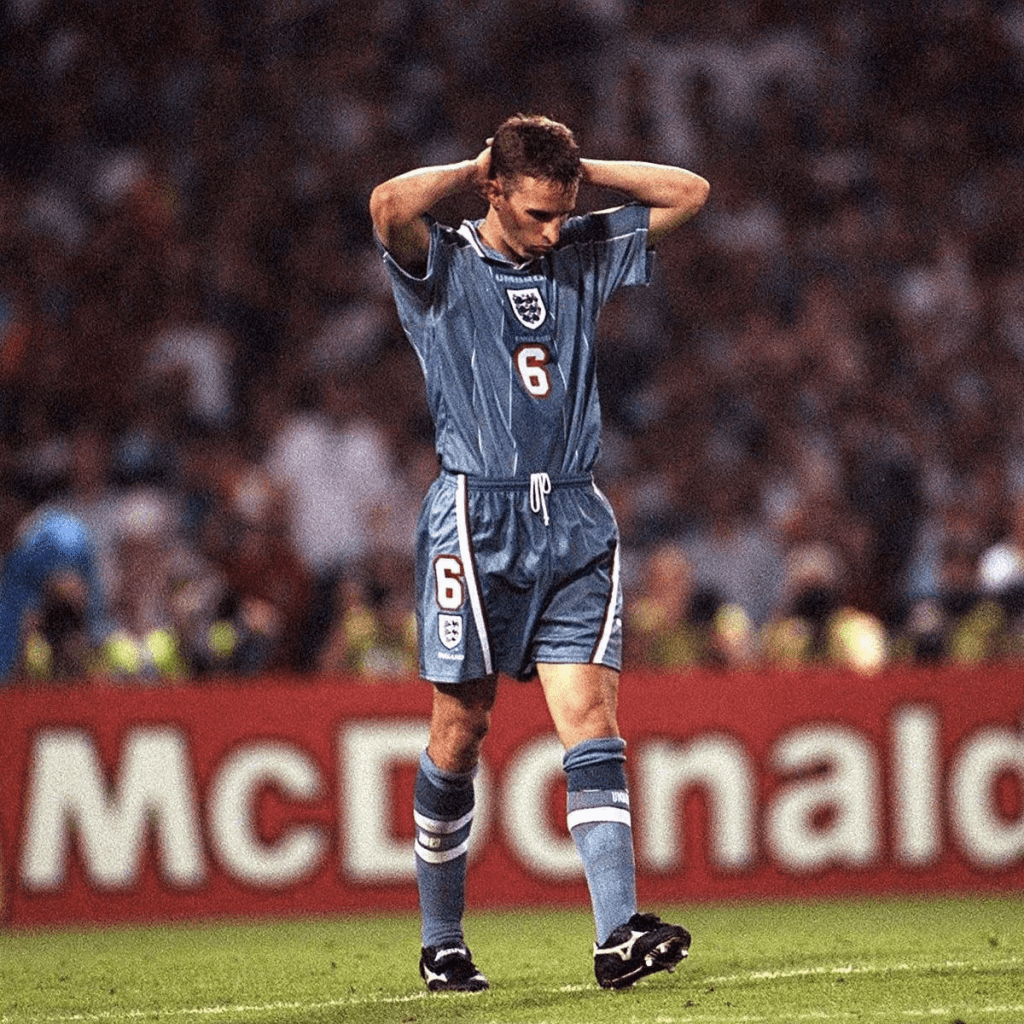

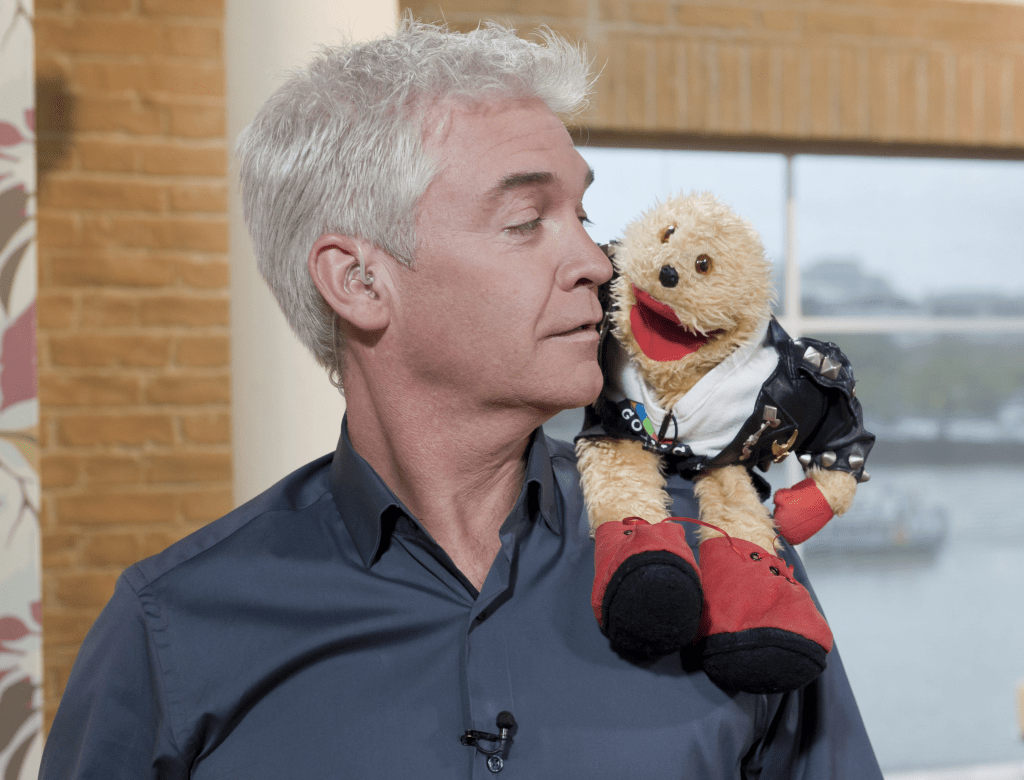
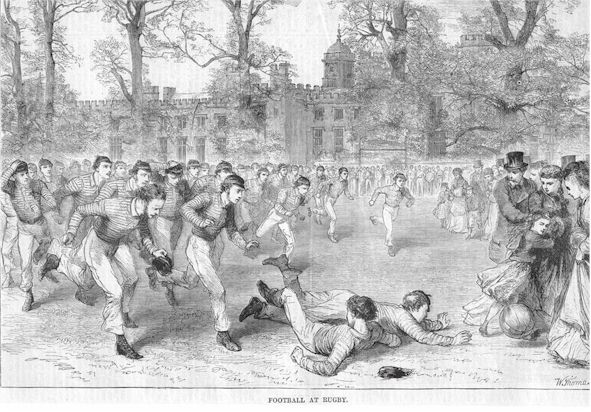
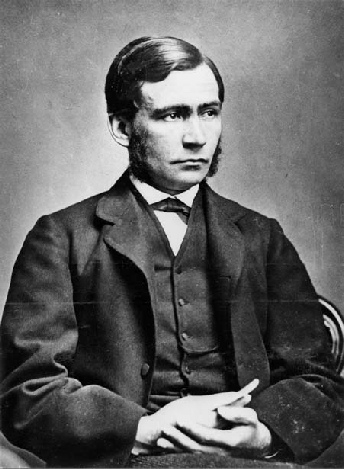
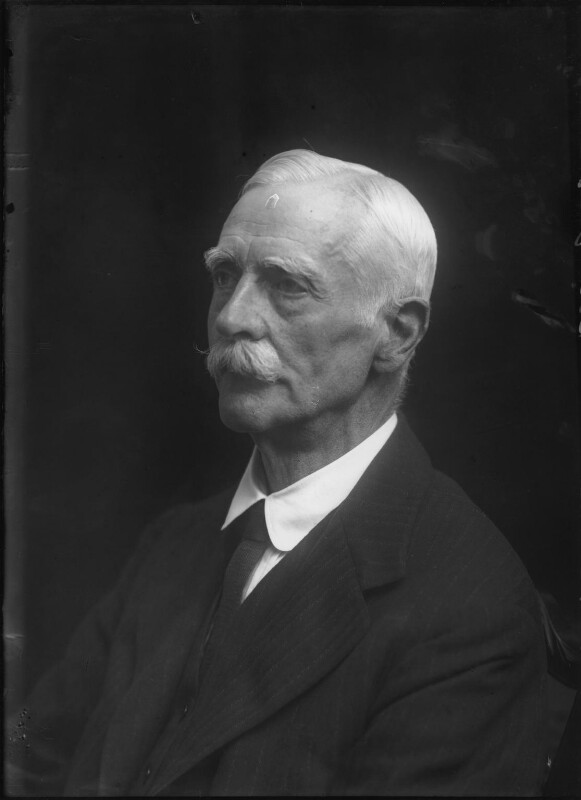
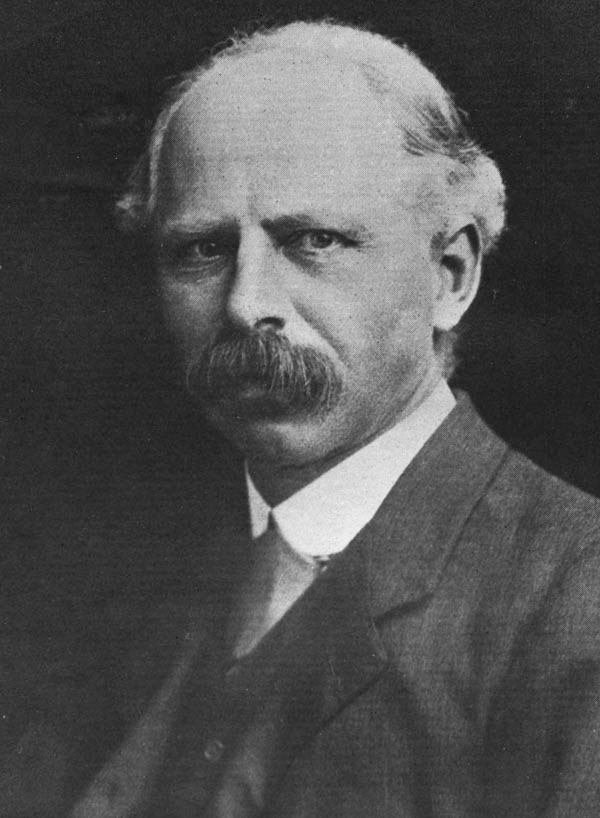
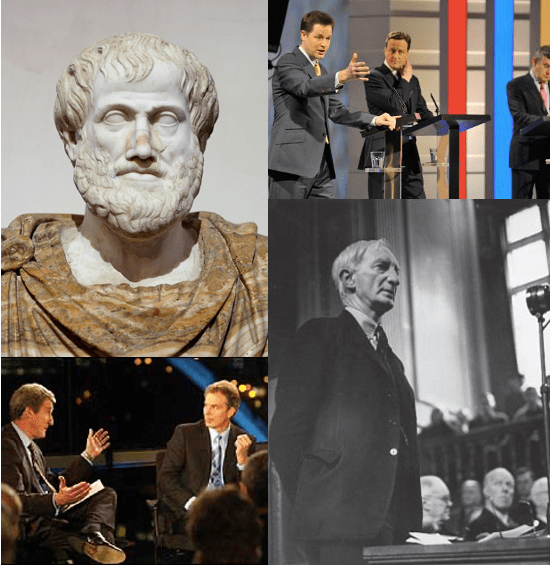
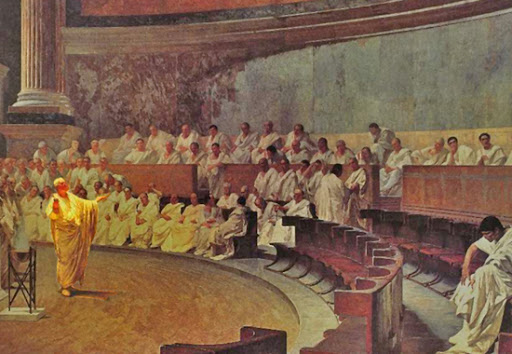
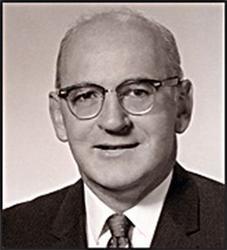
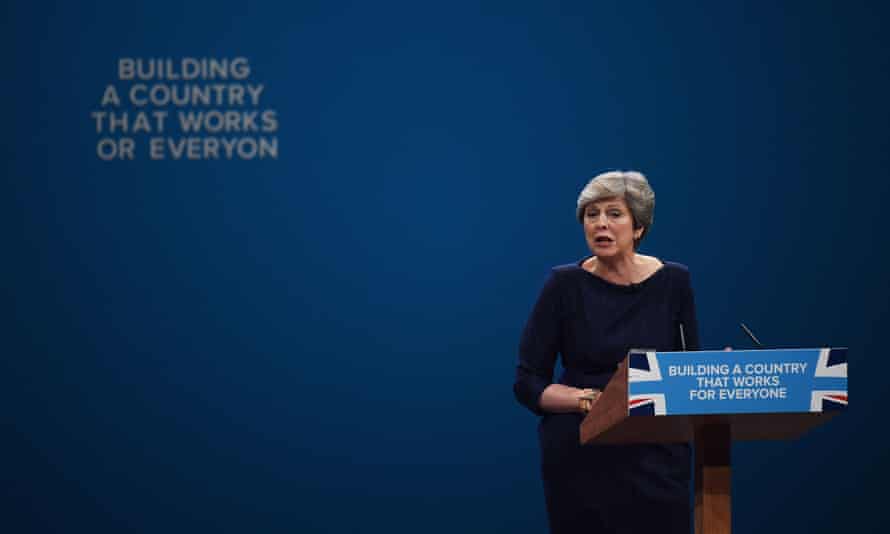
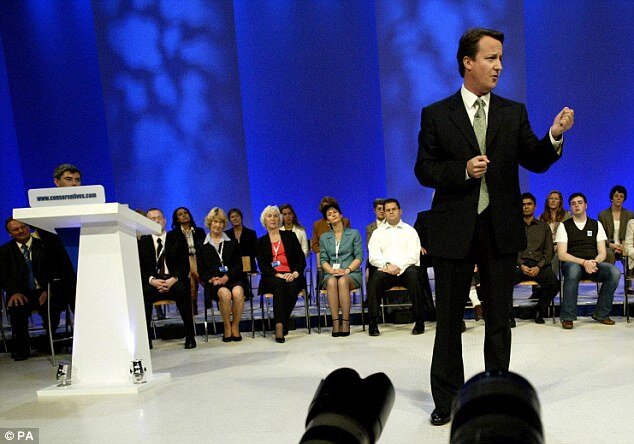
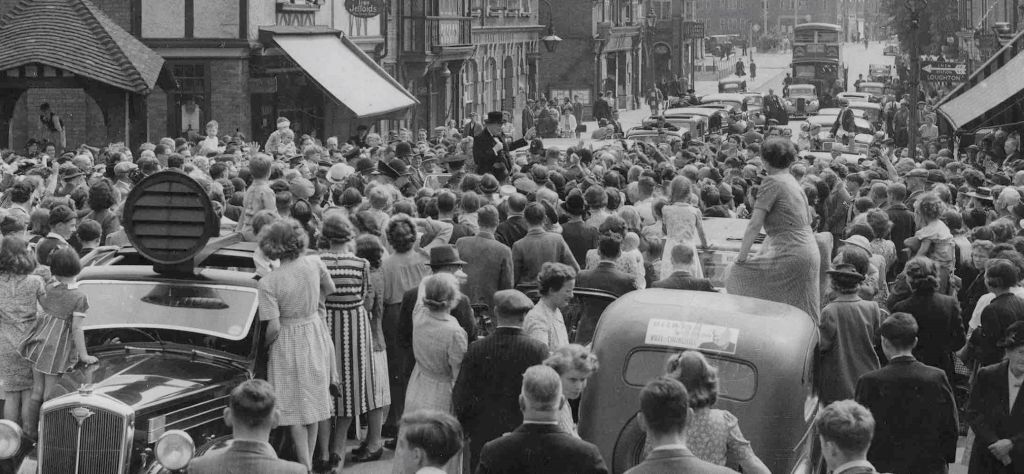
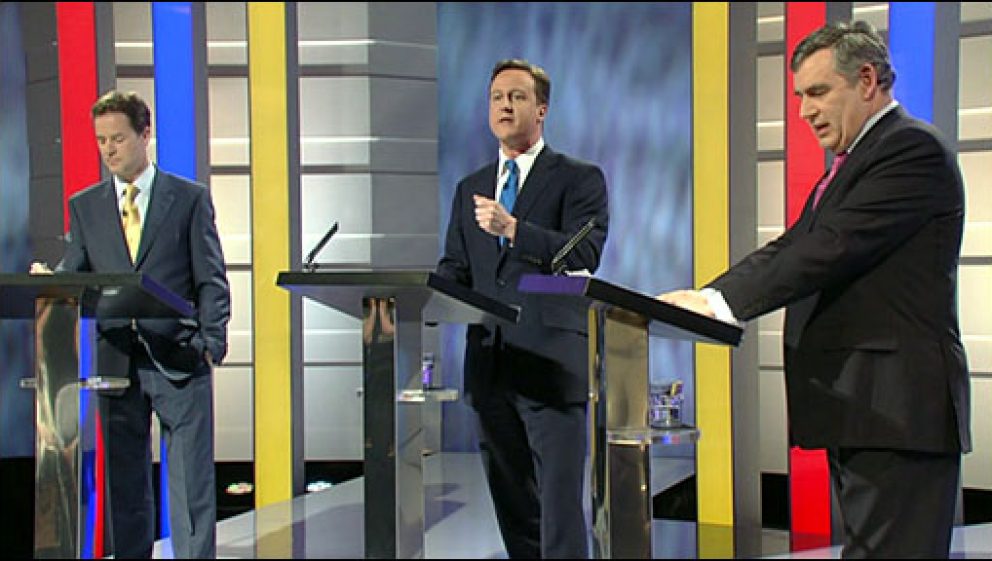
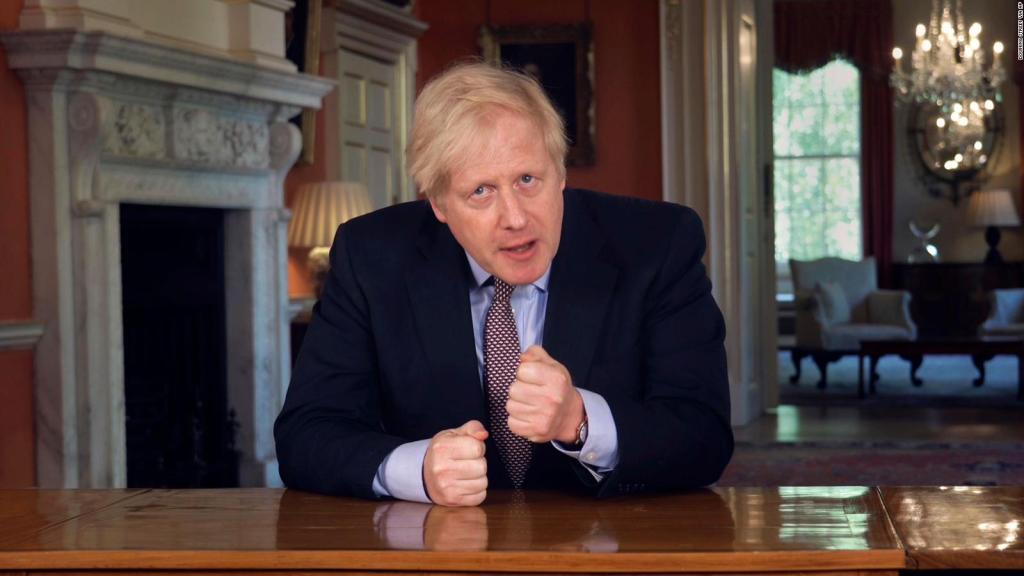
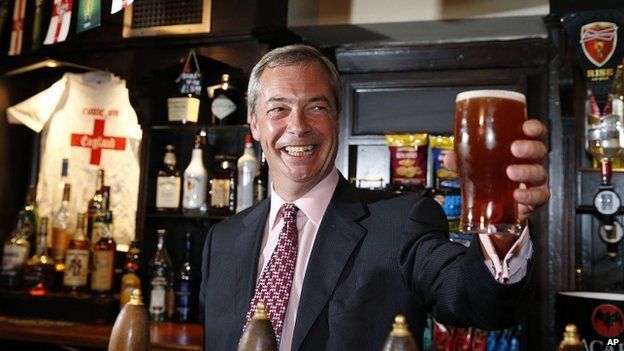
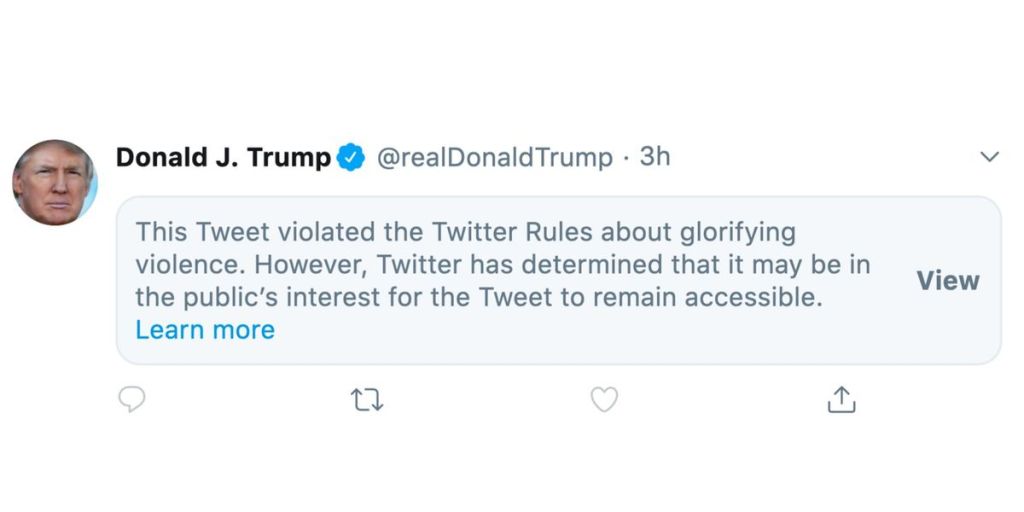
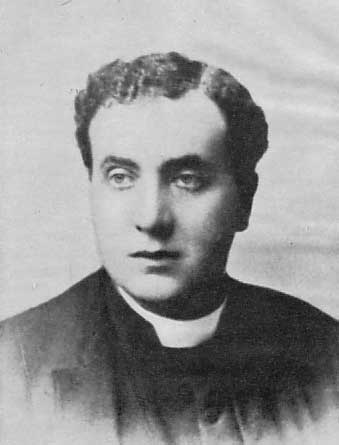
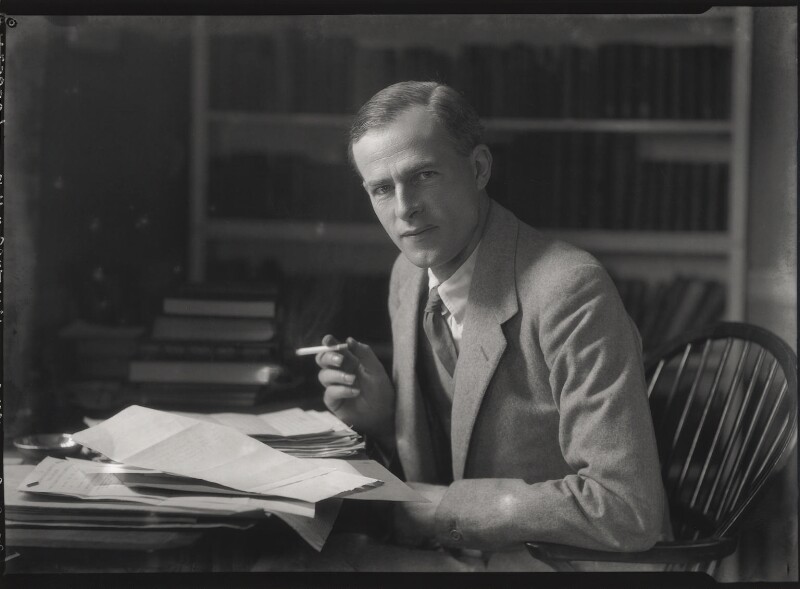
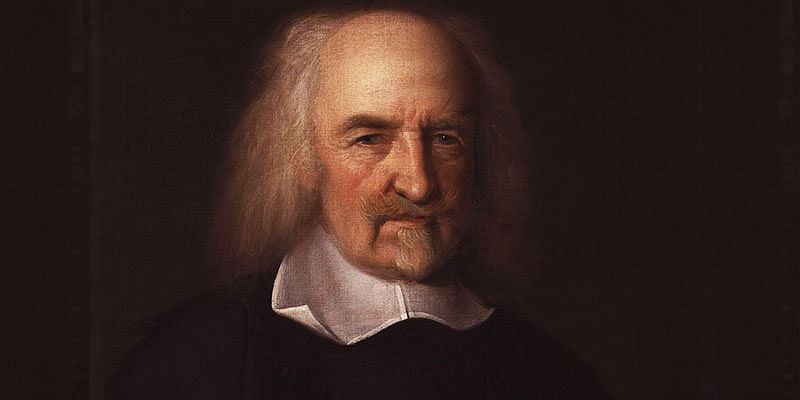
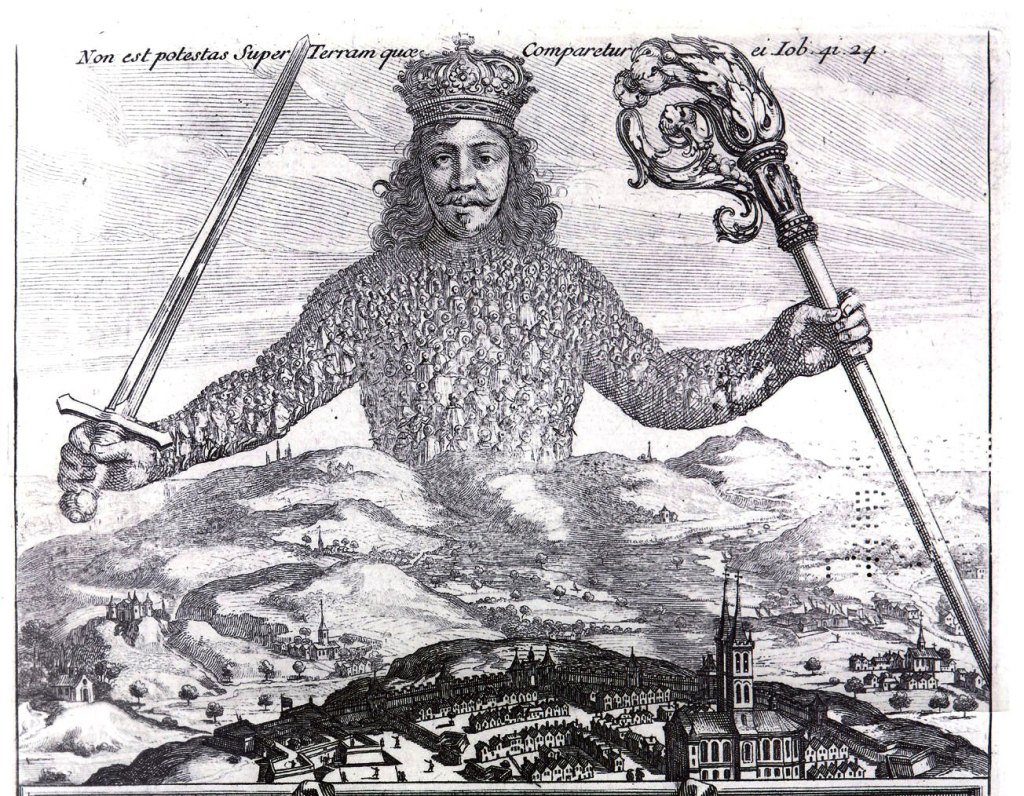

 Why I Write Such Good Blogs